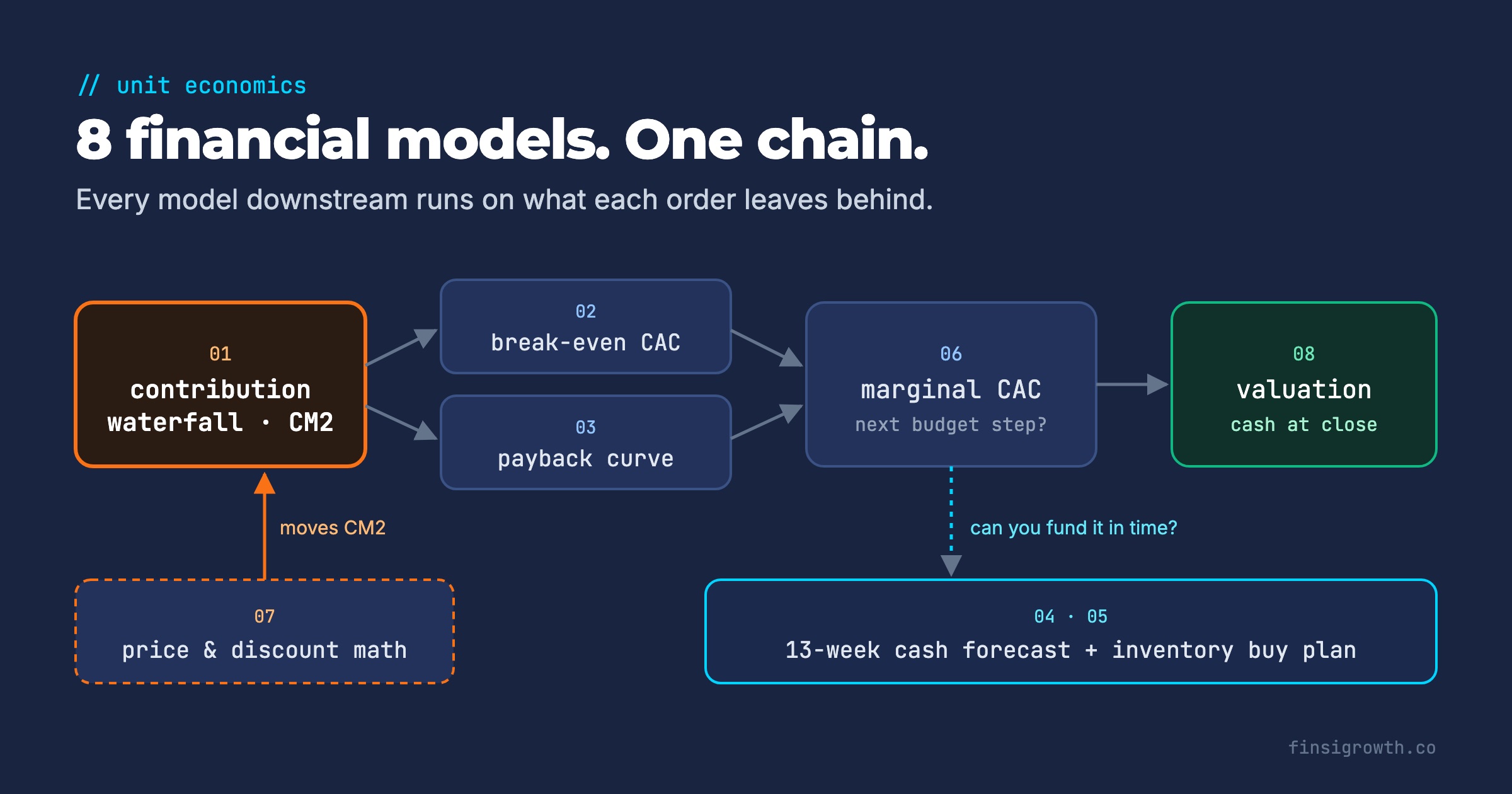
The 8 Financial Models Every DTC Founder Should Have
Most founder finance templates are built for venture-backed SaaS. Here are the 8 models a DTC brand actually runs on, with worked math and the decision each one drives.
Strategies, case studies, and lessons from scaling DTC brands with AI-powered growth.
Most founder finance templates are built for venture-backed SaaS. Here are the 8 models a DTC brand actually runs on, with worked math and the decision each one drives.
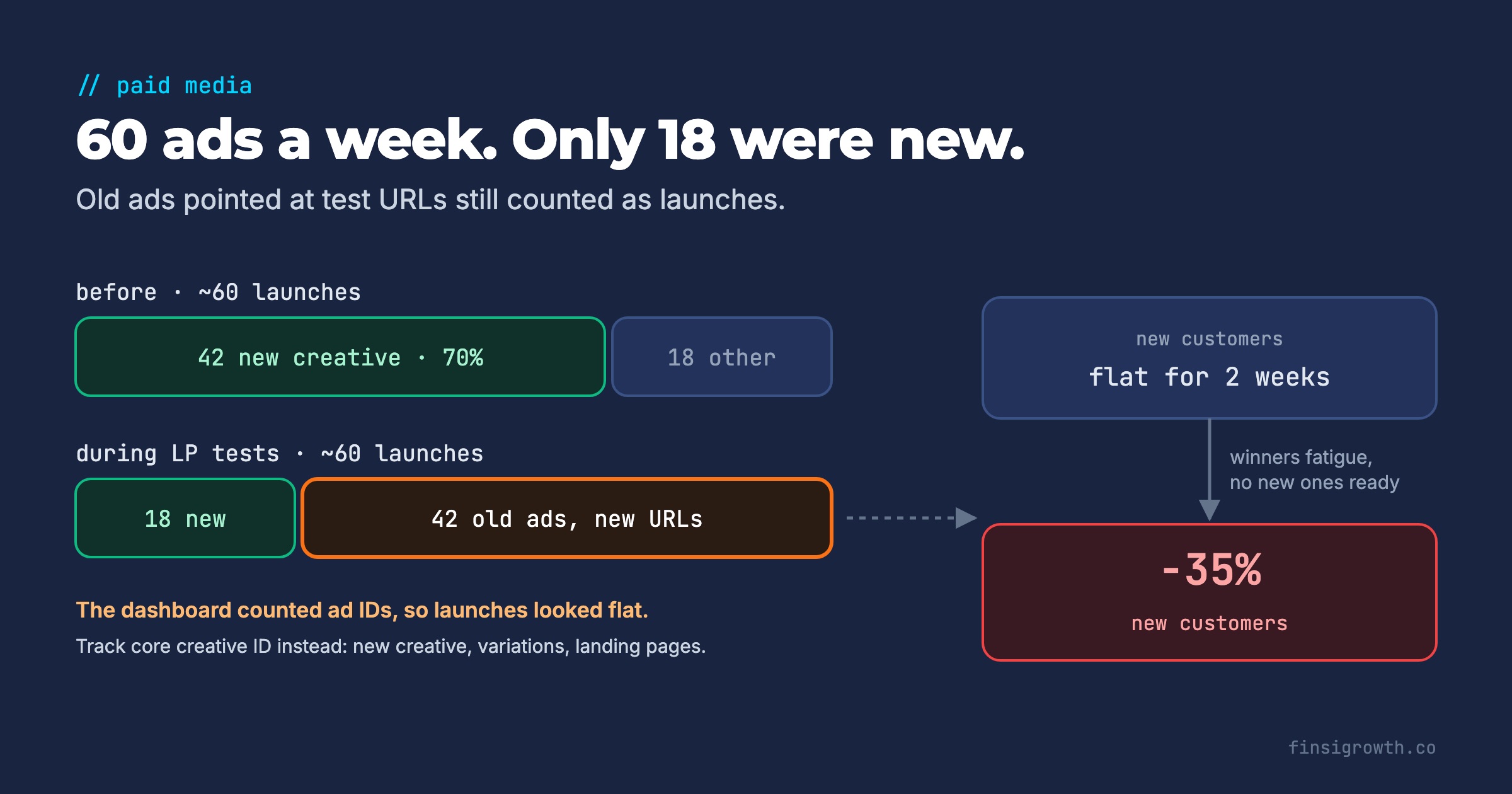
A brand launched ~60 Meta ads a week and still lost 35% of new customers. Reused ads pointed at test URLs were counted as new launches. Here's how to track your launch mix so it can't happen to you.
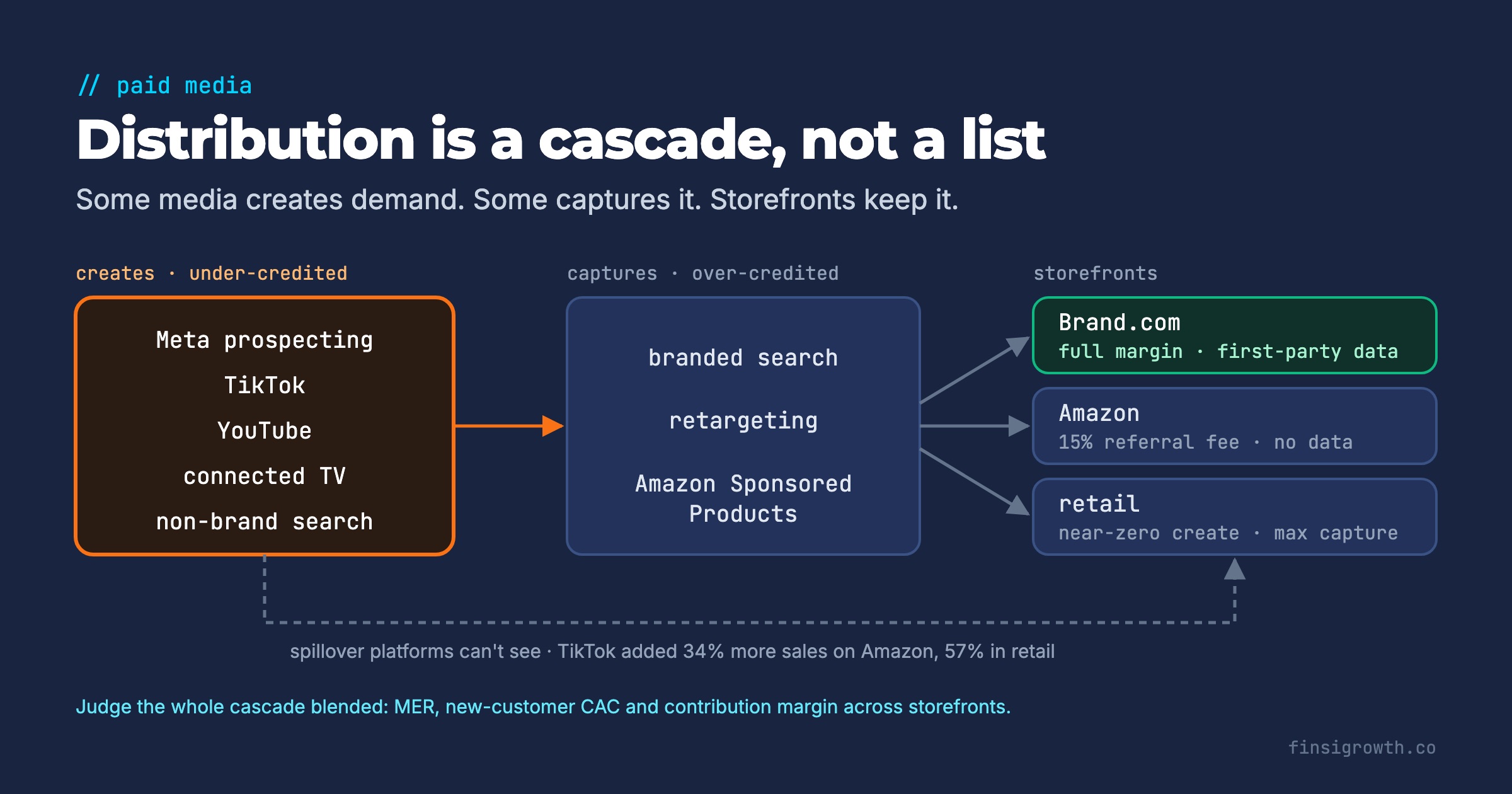
Some campaigns create demand and others capture it, often inside the same ad platform. Here's how to map your demand cascade, measure it and budget it as one system.
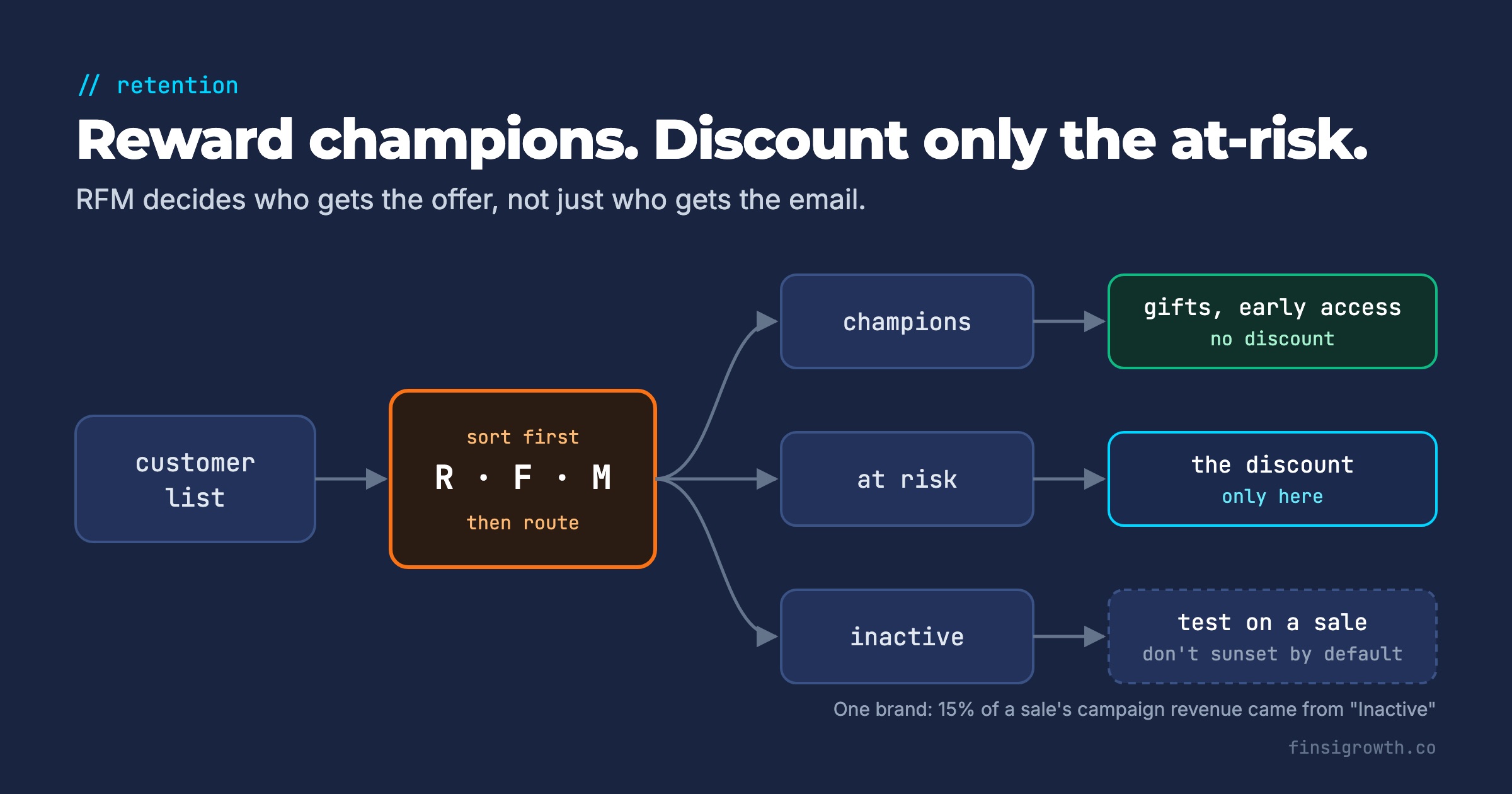
Klaviyo's Behind the Brands 2026 profiles 11 brands. We sorted the tactics worth copying from the stats that only measure attributed revenue, and turned the useful parts into a one-week checklist.
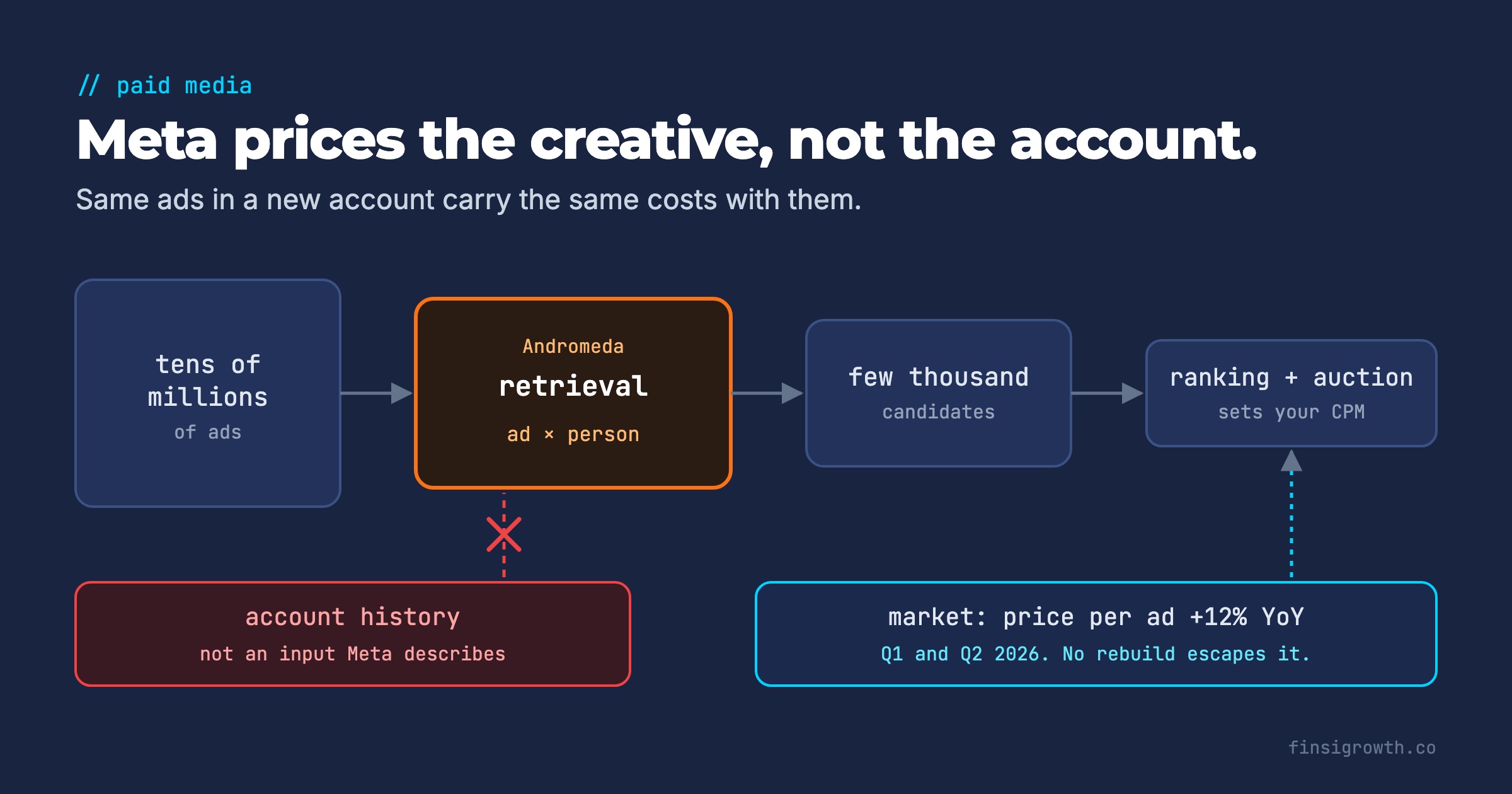
Why rebuilding a Meta Business Manager doesn't lower CPMs: Andromeda picks ads by creative, so the same ads carry the same costs into a new account.
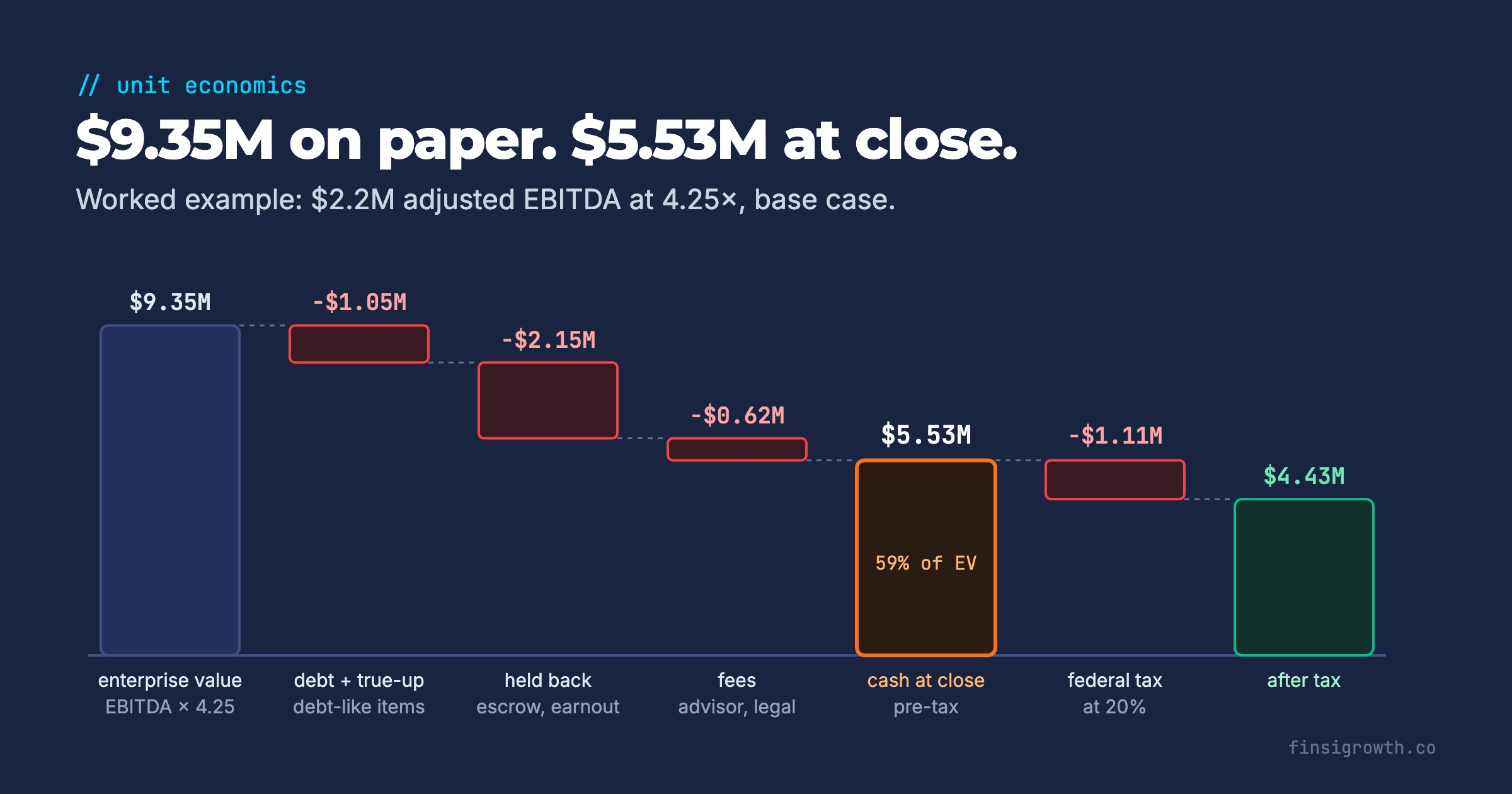
How a DTC brand is valued: adjusted EBITDA × multiple, 8 levers priced in turns, and the bridge from enterprise value to cash at close. Free calculator.
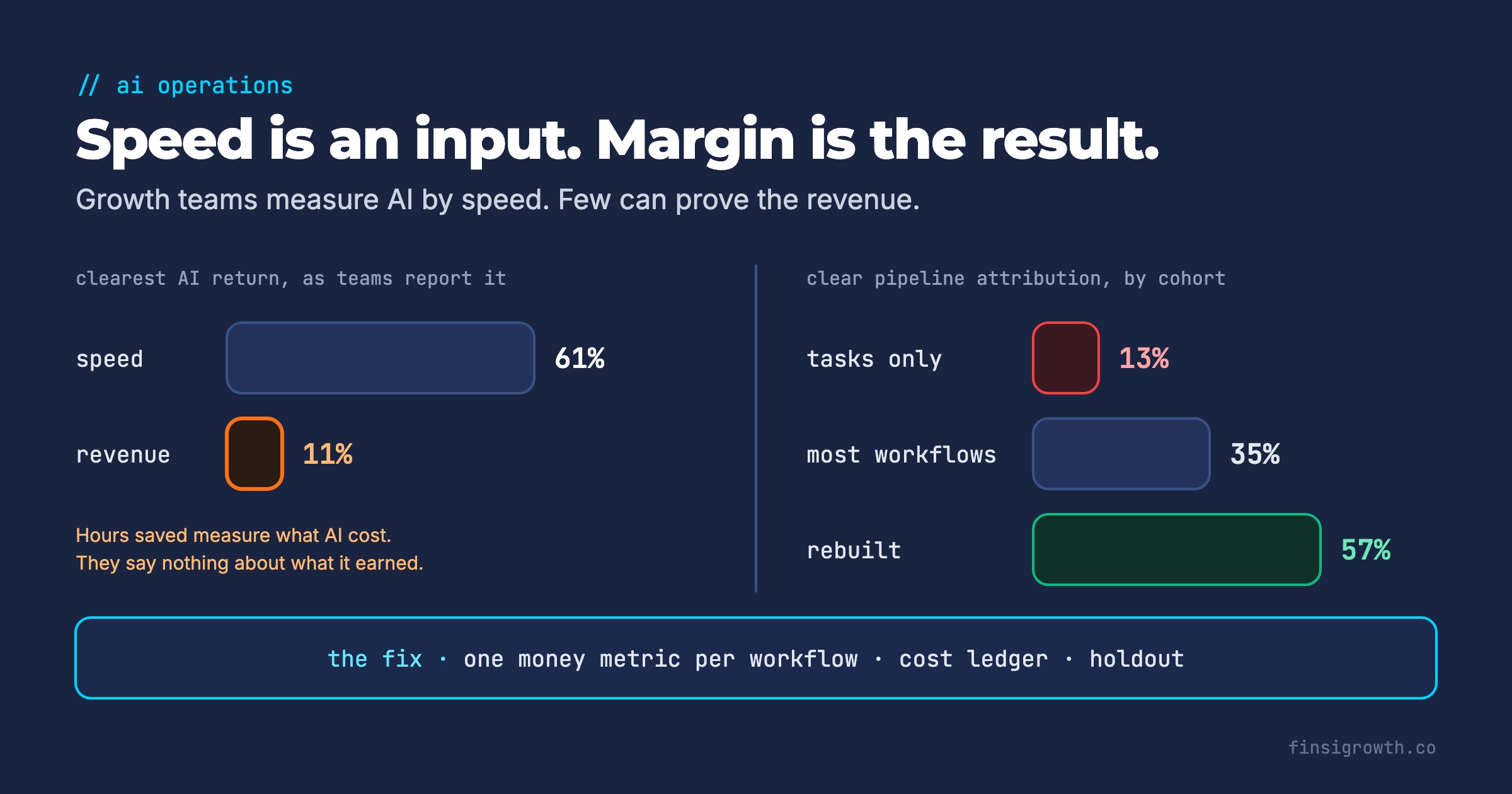
GrowthX's State of AI-Led Growth 2026: 61% of teams call speed their clearest AI ROI, 11% say revenue. What it means for DTC brands, and how to fix it.
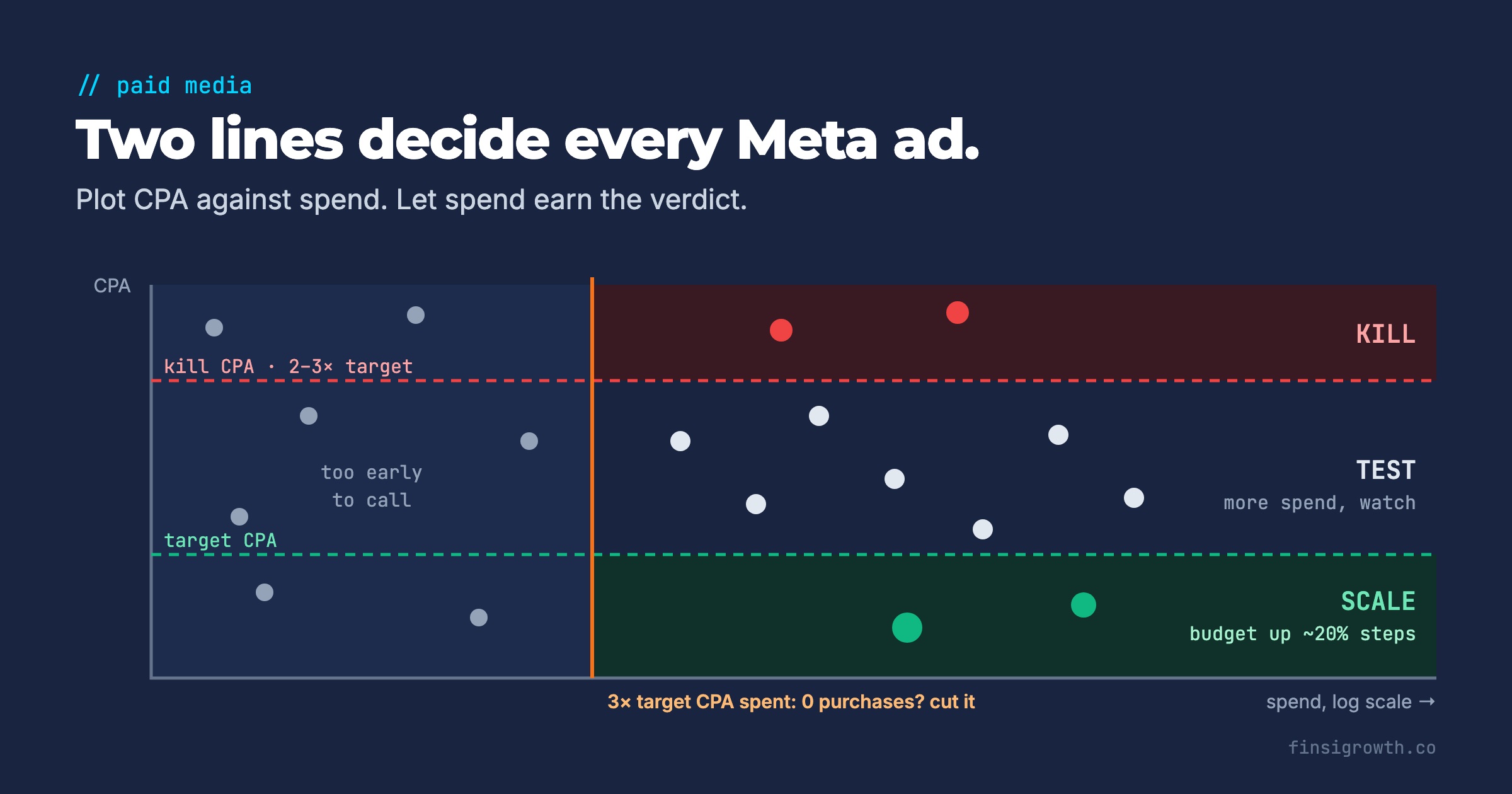
When to kill or scale a Meta ad: plot CPA vs. spend, set target and kill lines from your margins, and cut ads with zero sales after 3× target CPA.
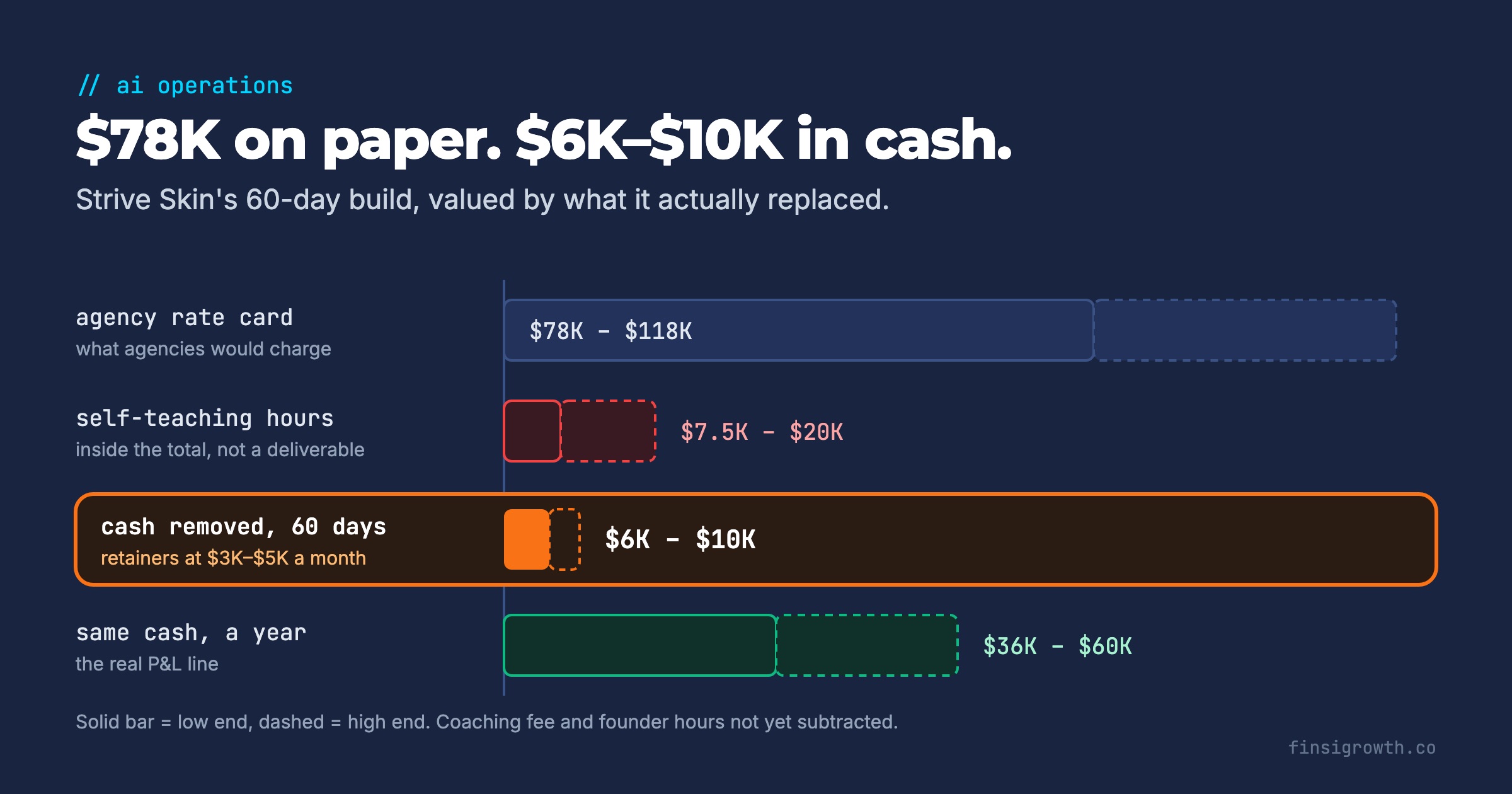
A solo skincare founder built $78K–$118K of agency-priced work with AI in 60 days. What DTC brands can copy, and how to value it in cash and margin.
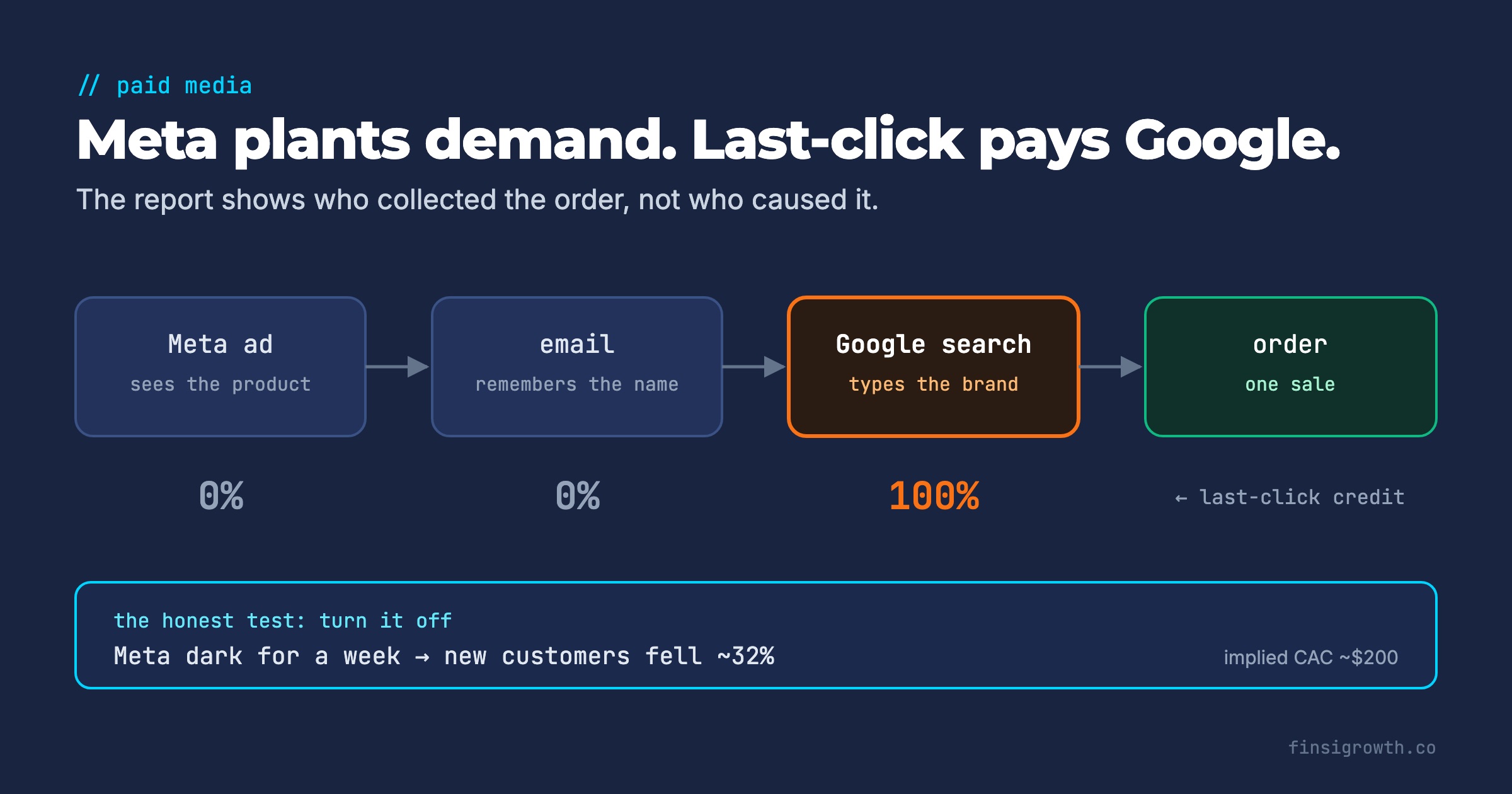
Last-click credits the final click, and that's usually a Google search after Meta, email or PR did the work. Audit the defaults before you move budget.
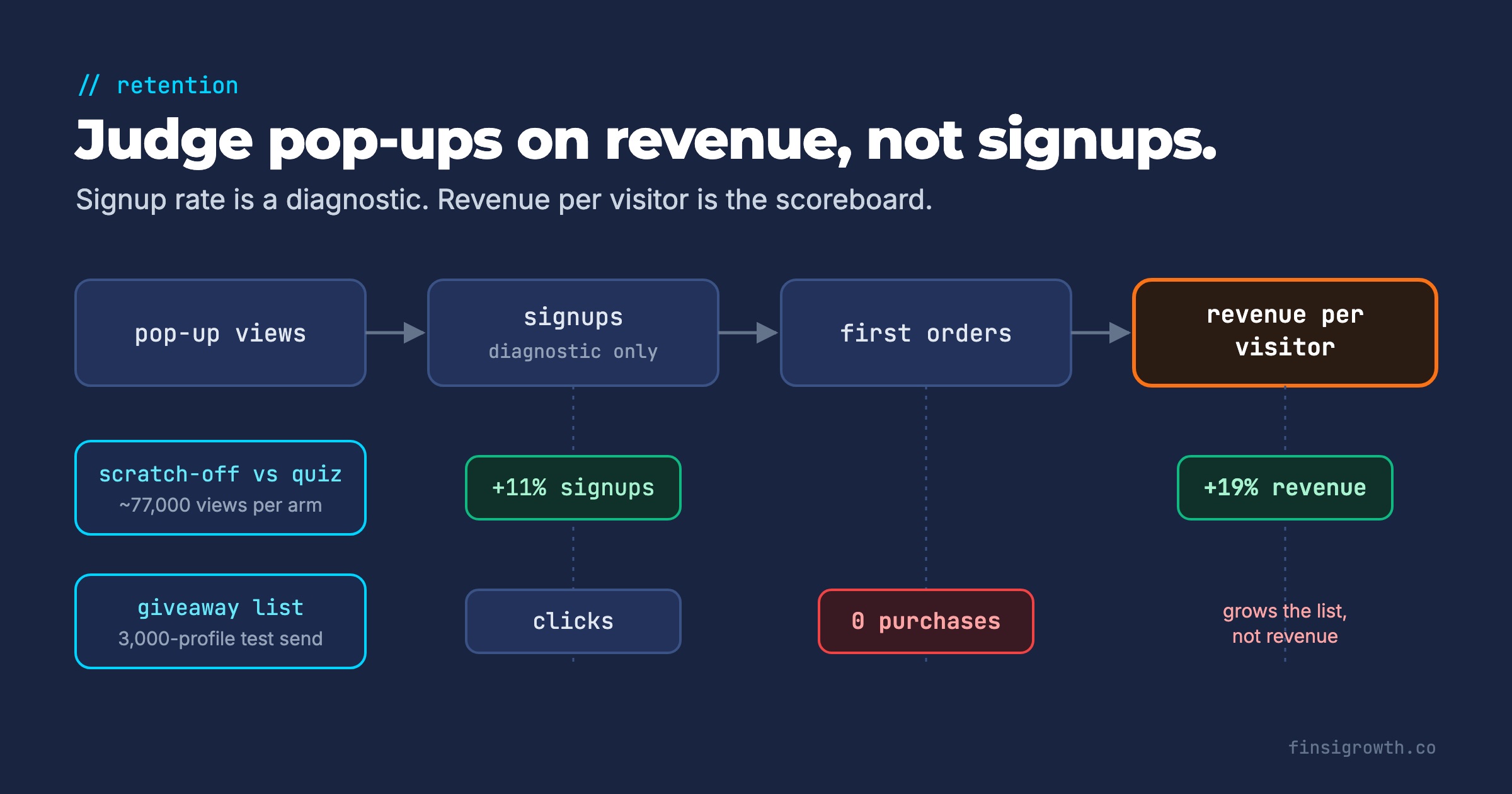
No pop-up format wins everywhere. Judge pop-up tests on revenue per visitor and blended CAC, not signup rate, and fix mobile timing before testing offers.
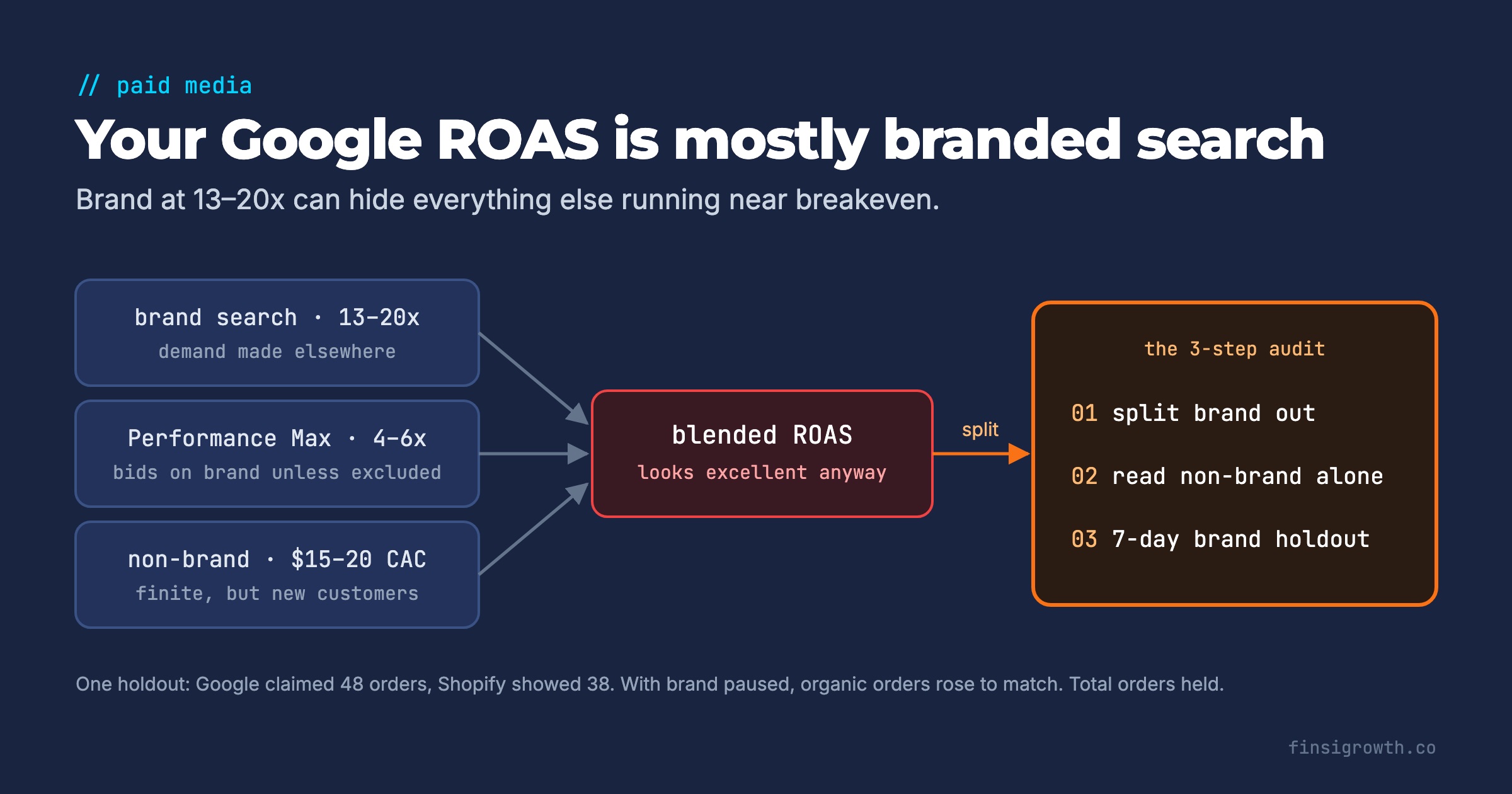
Blended Google ROAS is mostly branded search. Split brand out, read non-brand ROAS on its own, then run a brand holdout before you add a dollar of budget.
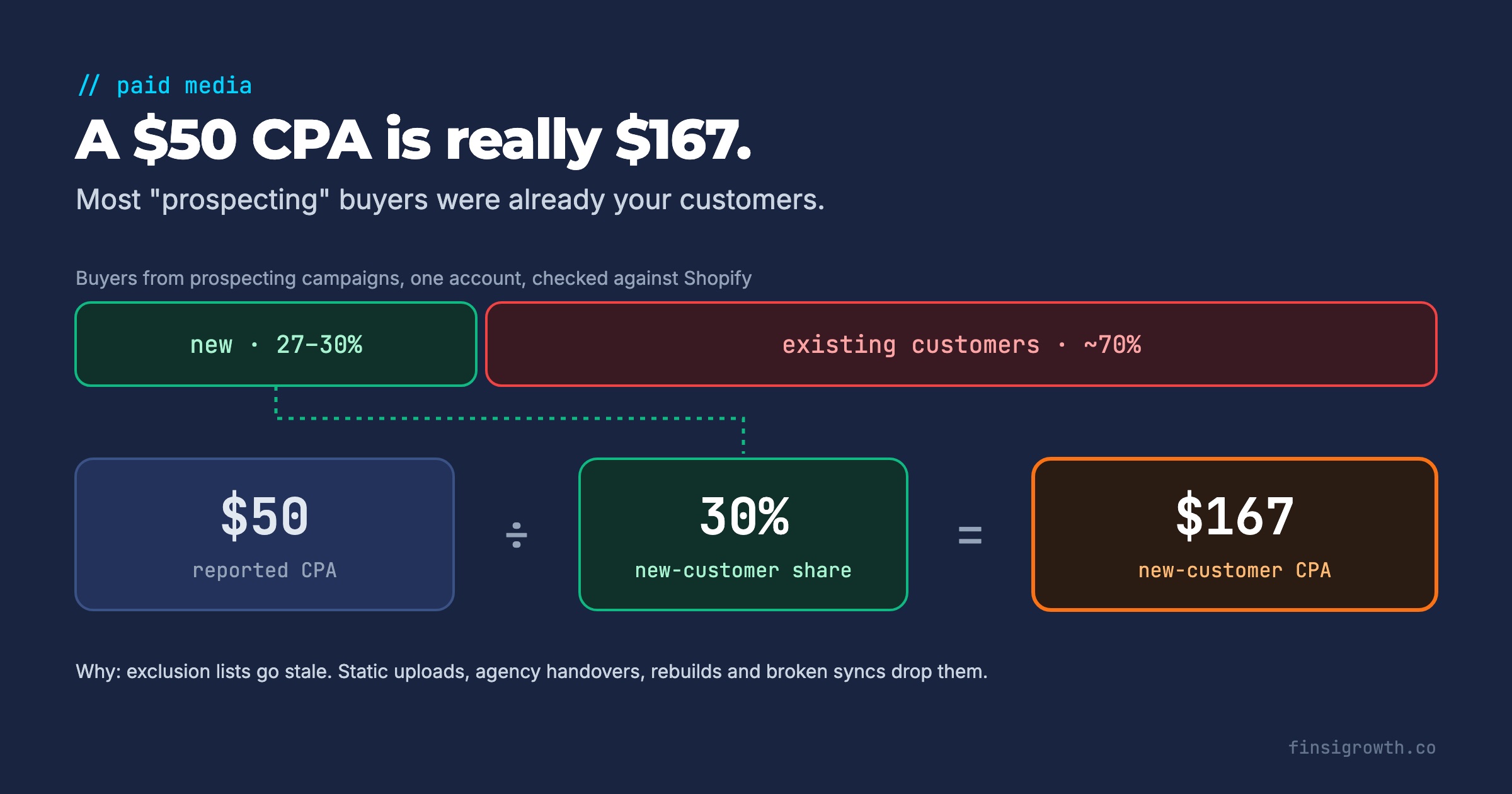
Prospecting campaigns often deliver only 27–30% new customers. Audit your exclusion lists, refresh them, and track new-customer share as the paid KPI.
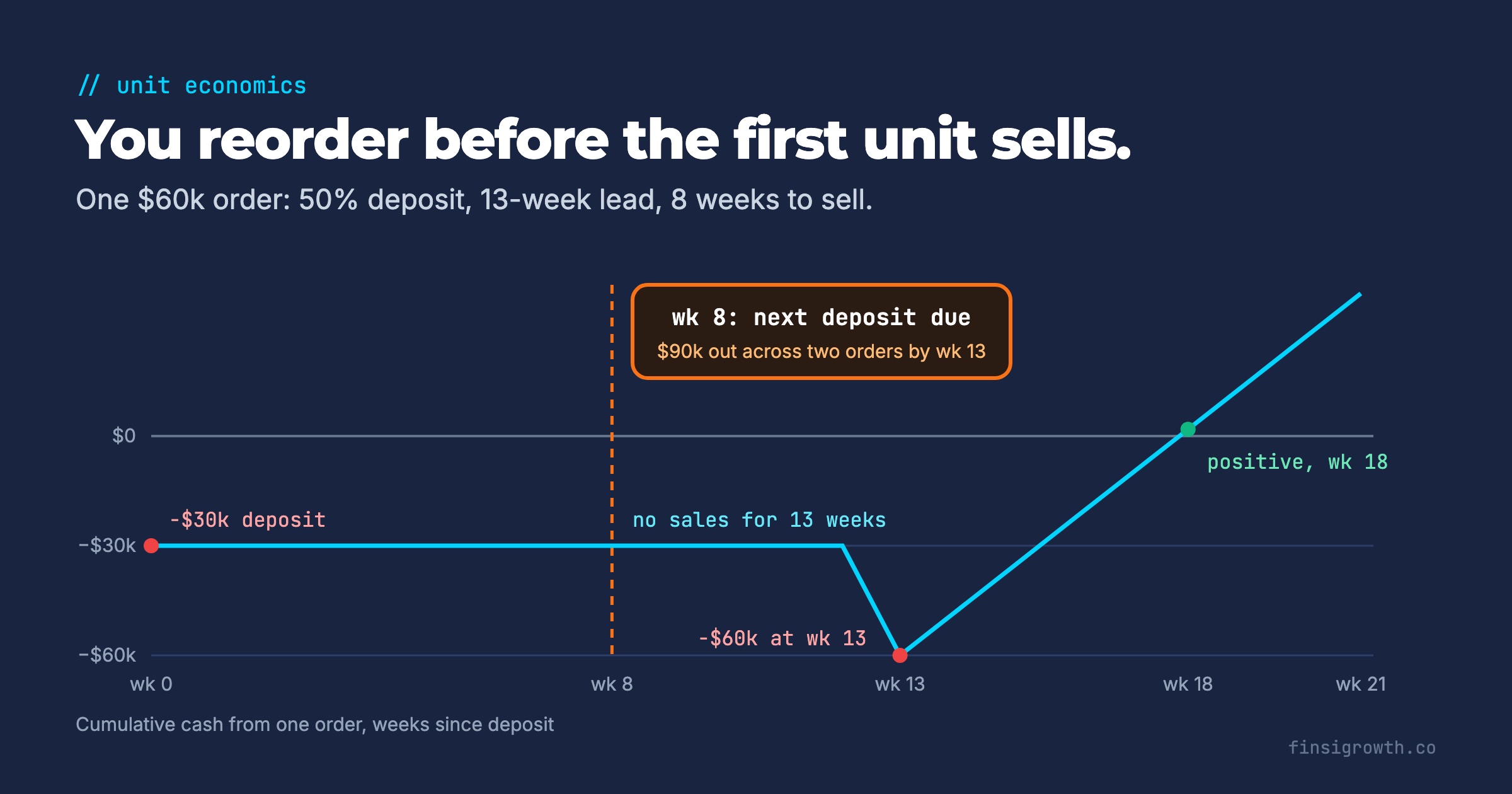
Most DTC stockouts are cash timing: you pay for stock months before it sells. Map lead times to cash, then recheck ad spend against stock every 3-4 days.
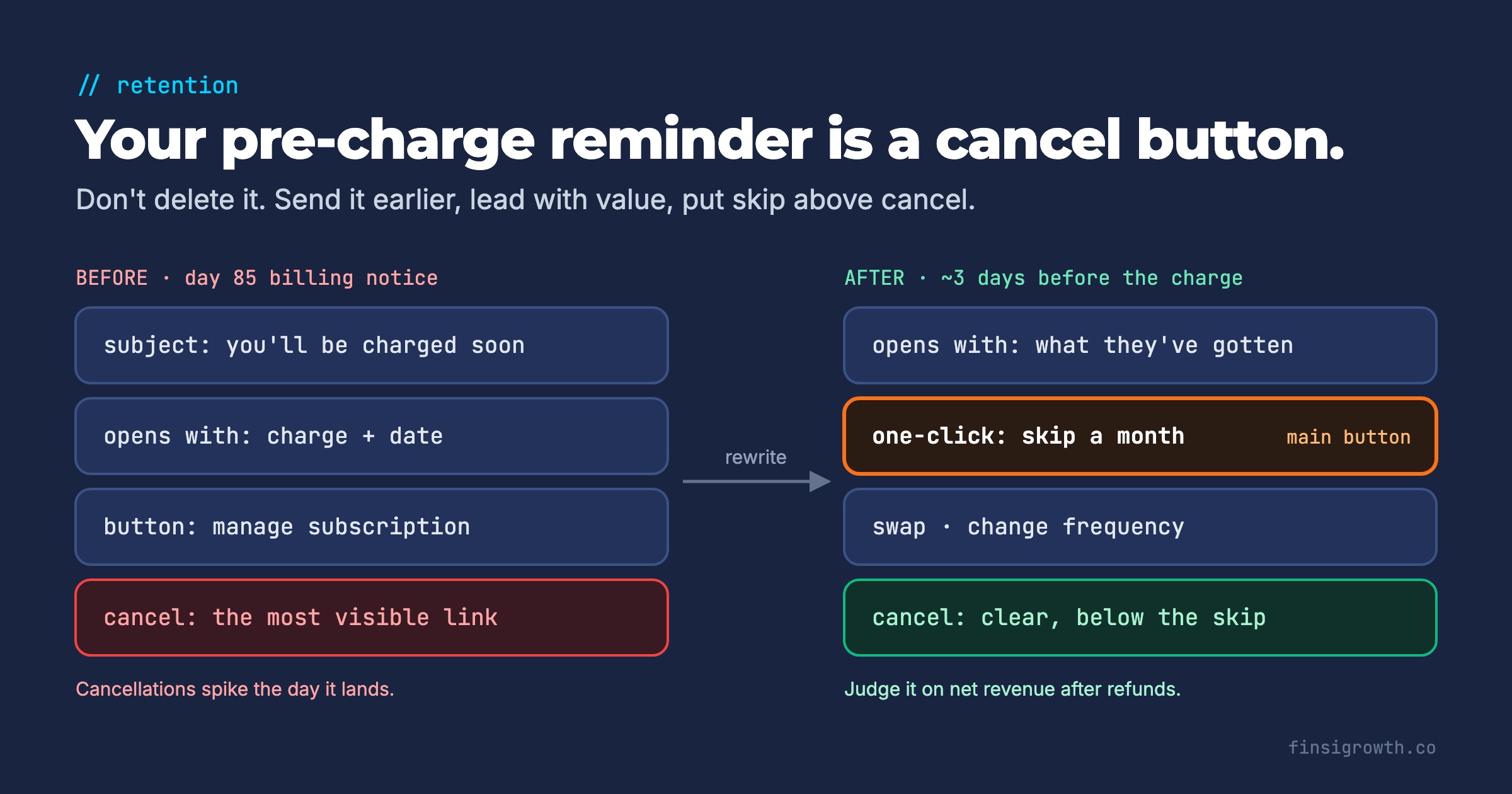
Cancellations spike the day your pre-charge reminder lands. Don't delete it. Send it earlier, lead with value and put a one-click skip above the cancel link.
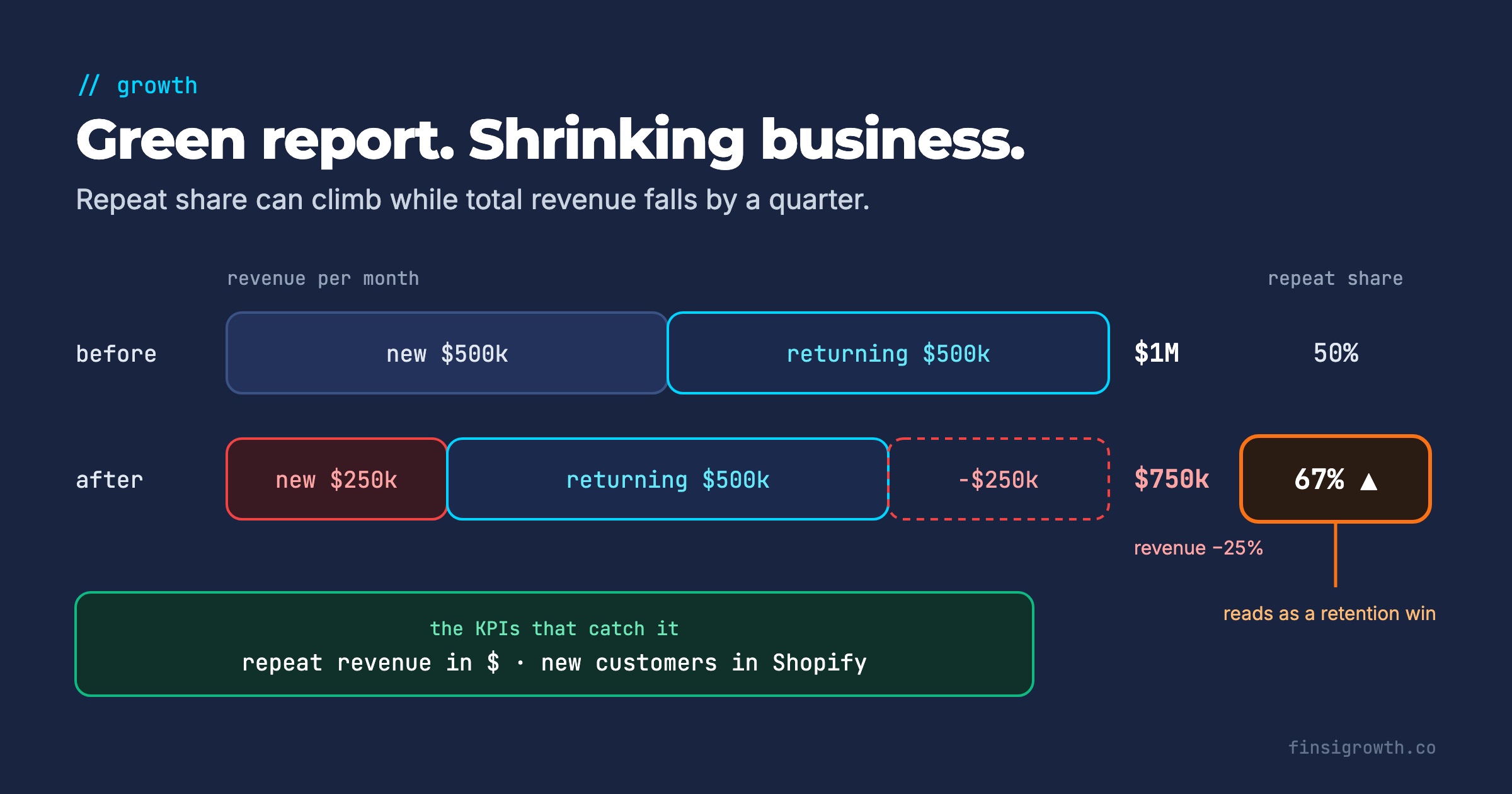
Agency reports stay green while the business stalls. Track new customers, absolute repeat revenue and written test briefs to see what's really happening.
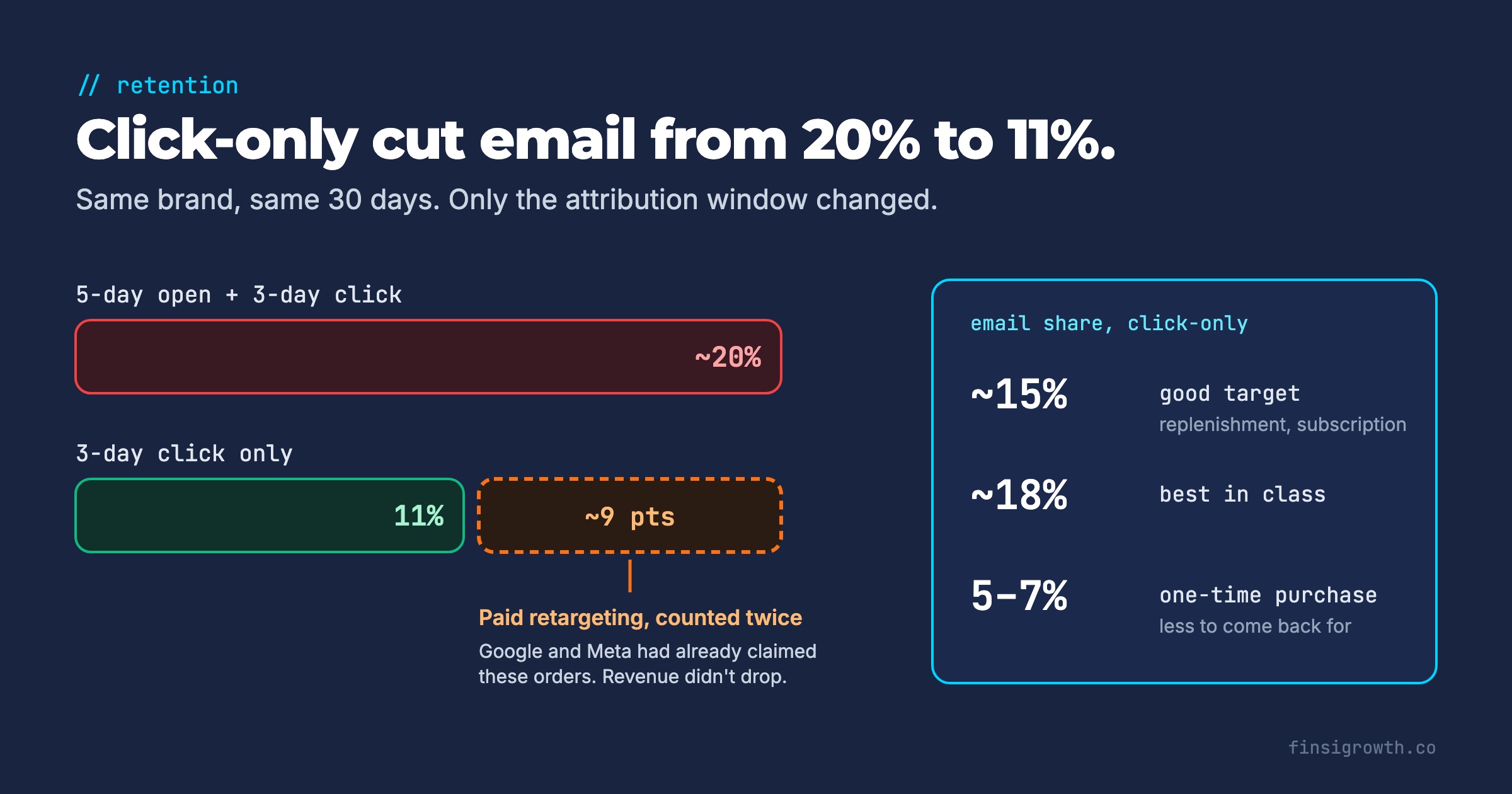
Klaviyo's 5-day open window credits email for sales it didn't drive. Switch to 2–3 day clicks, strip renewals, then run a holdout to see what email adds.
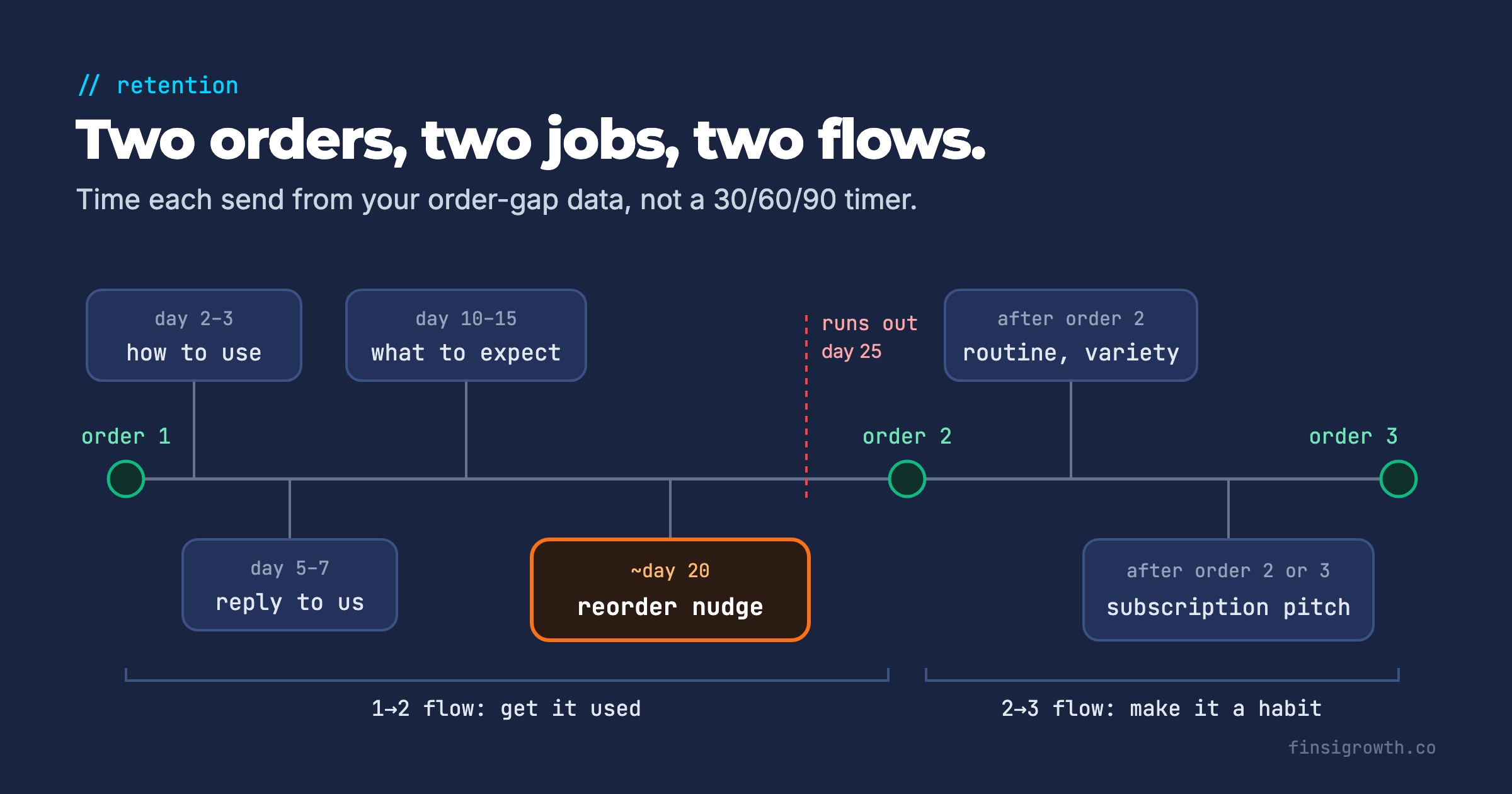
Build separate 1→2 and 2→3 flows. Time each send from your own order-gap data, lead with usage education, not discounts, and pitch subscription after order two.
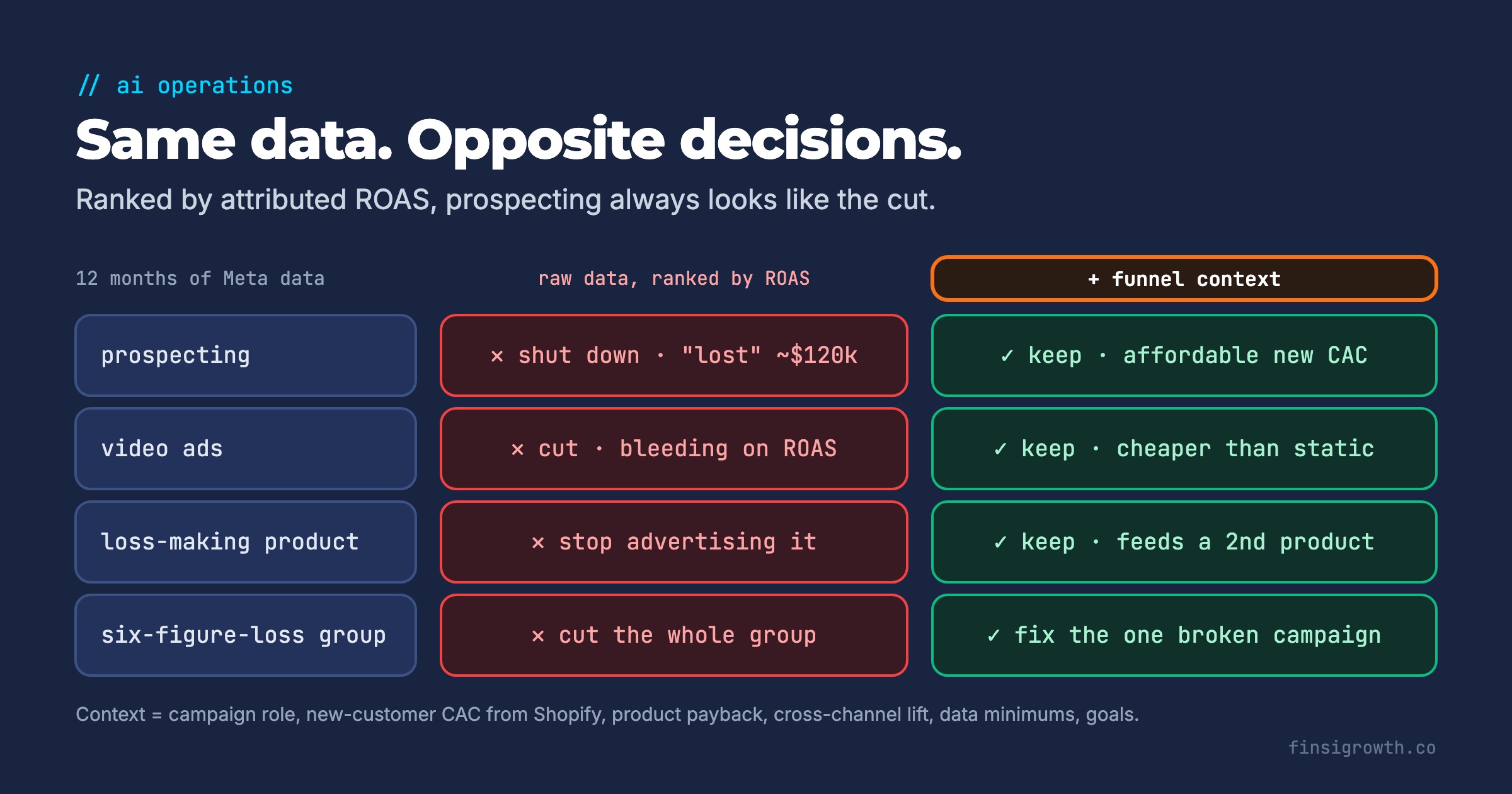
Generic AI ad analysis ranks campaigns by attributed ROAS, so prospecting looks worst. Judge it on new-customer CAC and funnel role before you cut it.
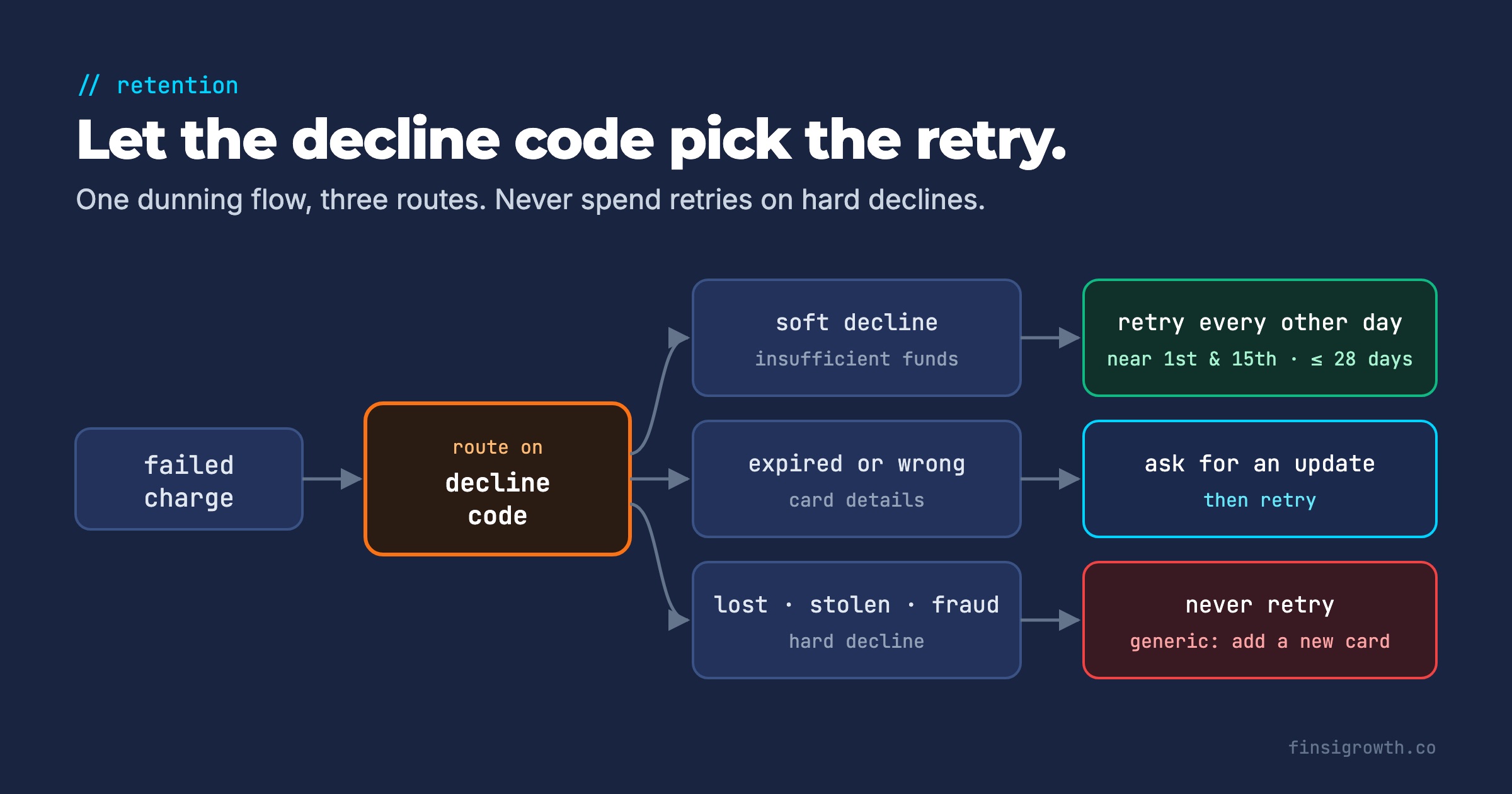
Failed payments aren't a love problem. Route dunning by decline code: retry soft declines near paydays, ask hard declines for a new card, match the message.
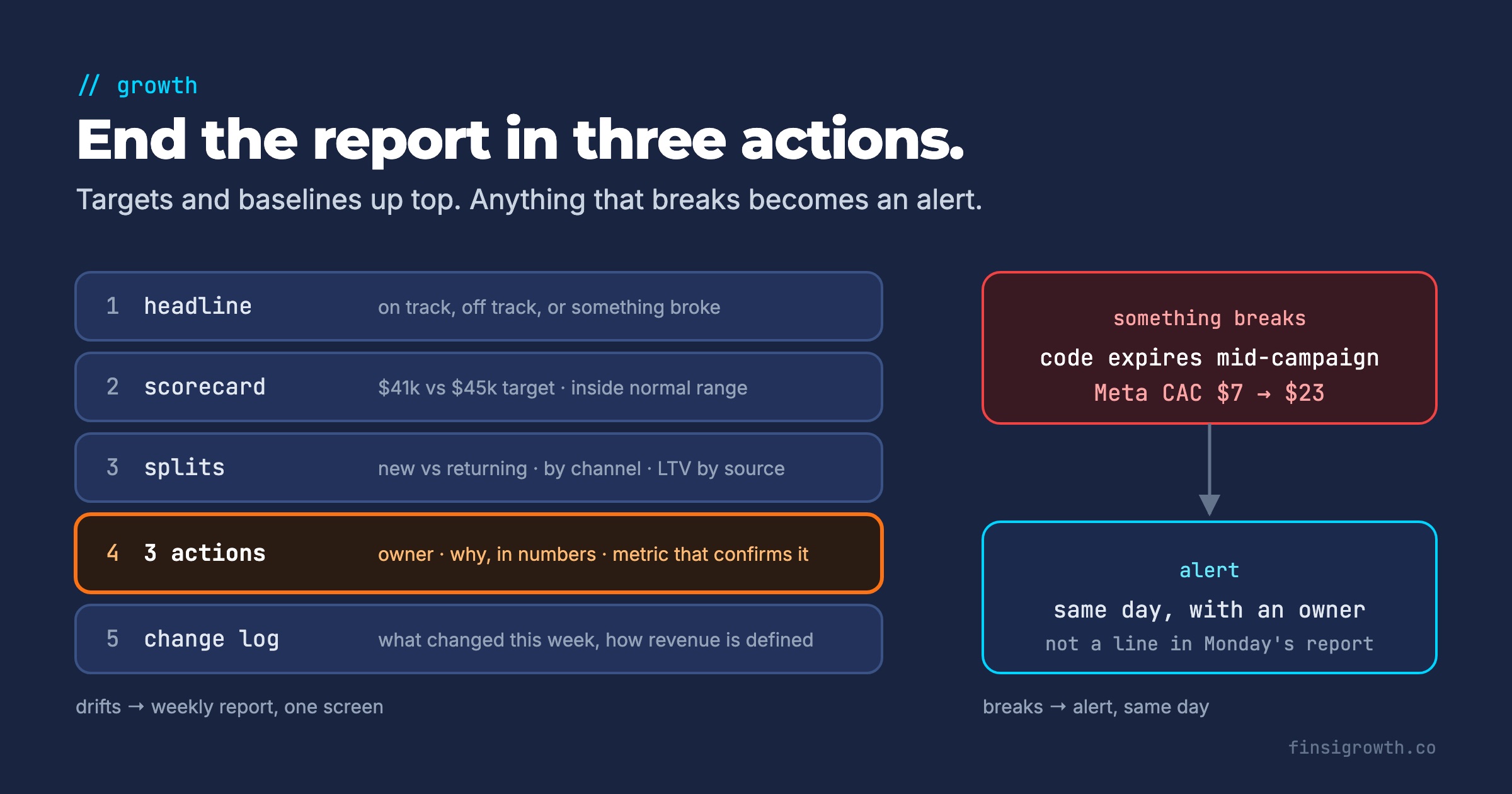
A report earns action when every metric sits against a target and its own baseline, blended numbers are split, it ends in 3 actions, and alerts fire.
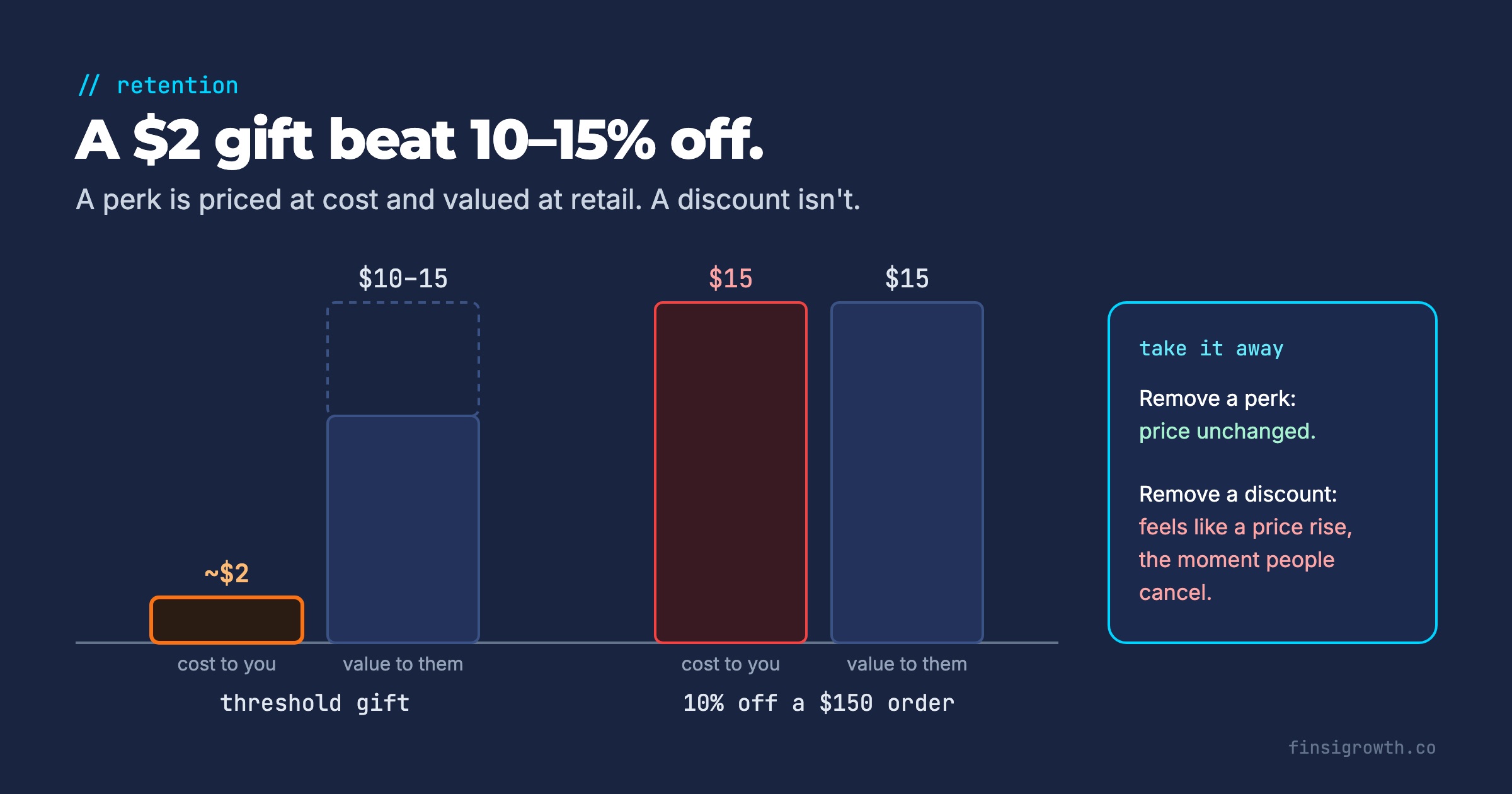
Swap percent-off for perks: a ~$2 gift beat 10–15% off, and VIP members reached ~3x median LTV. Here's how to wean off discounts without a cash-flow hole.
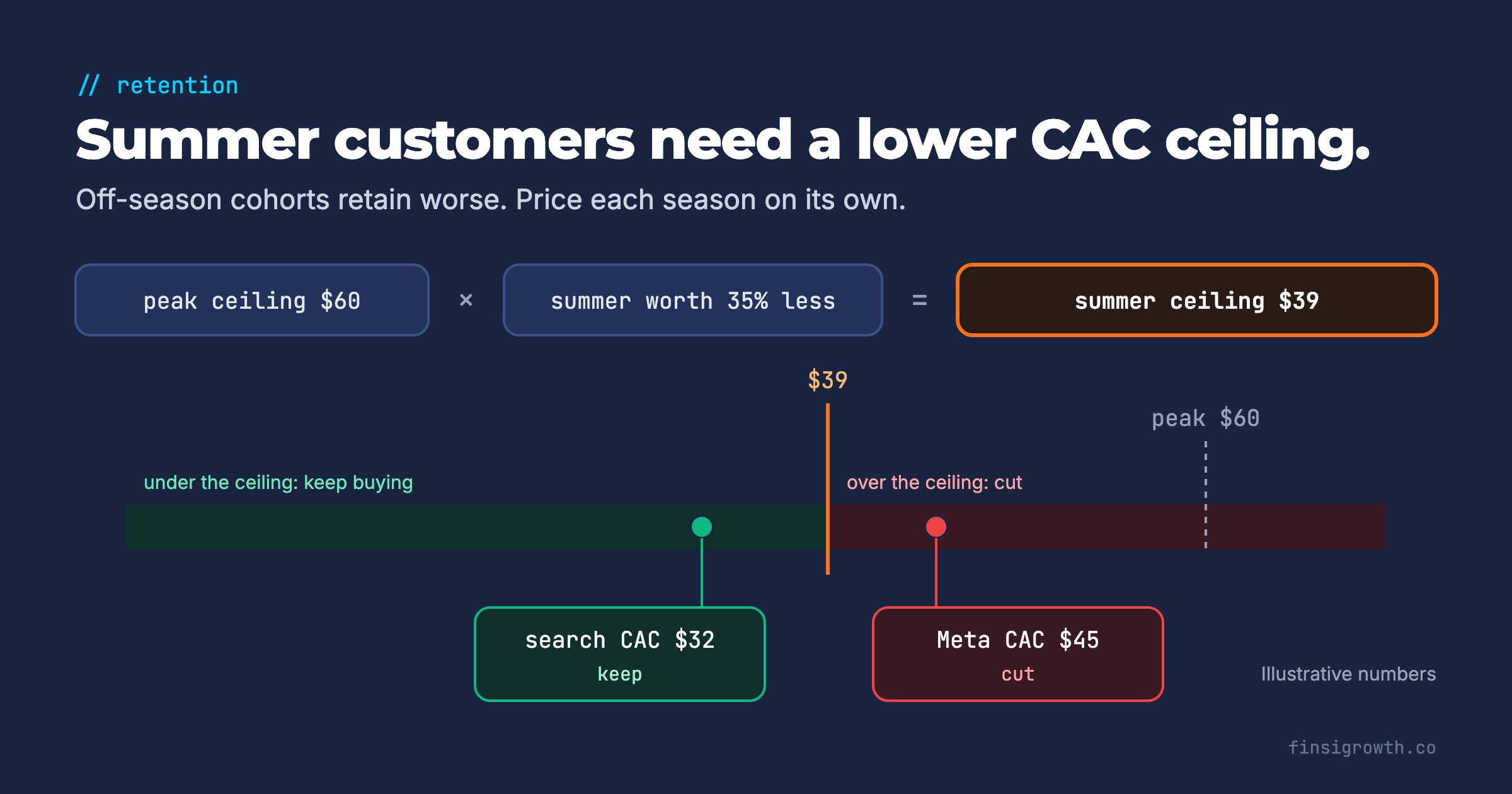
Off-season customers often retain worse. One tea brand's summer cohorts come back 30–40% less. Set CAC ceilings by acquisition month, not one yearly number.
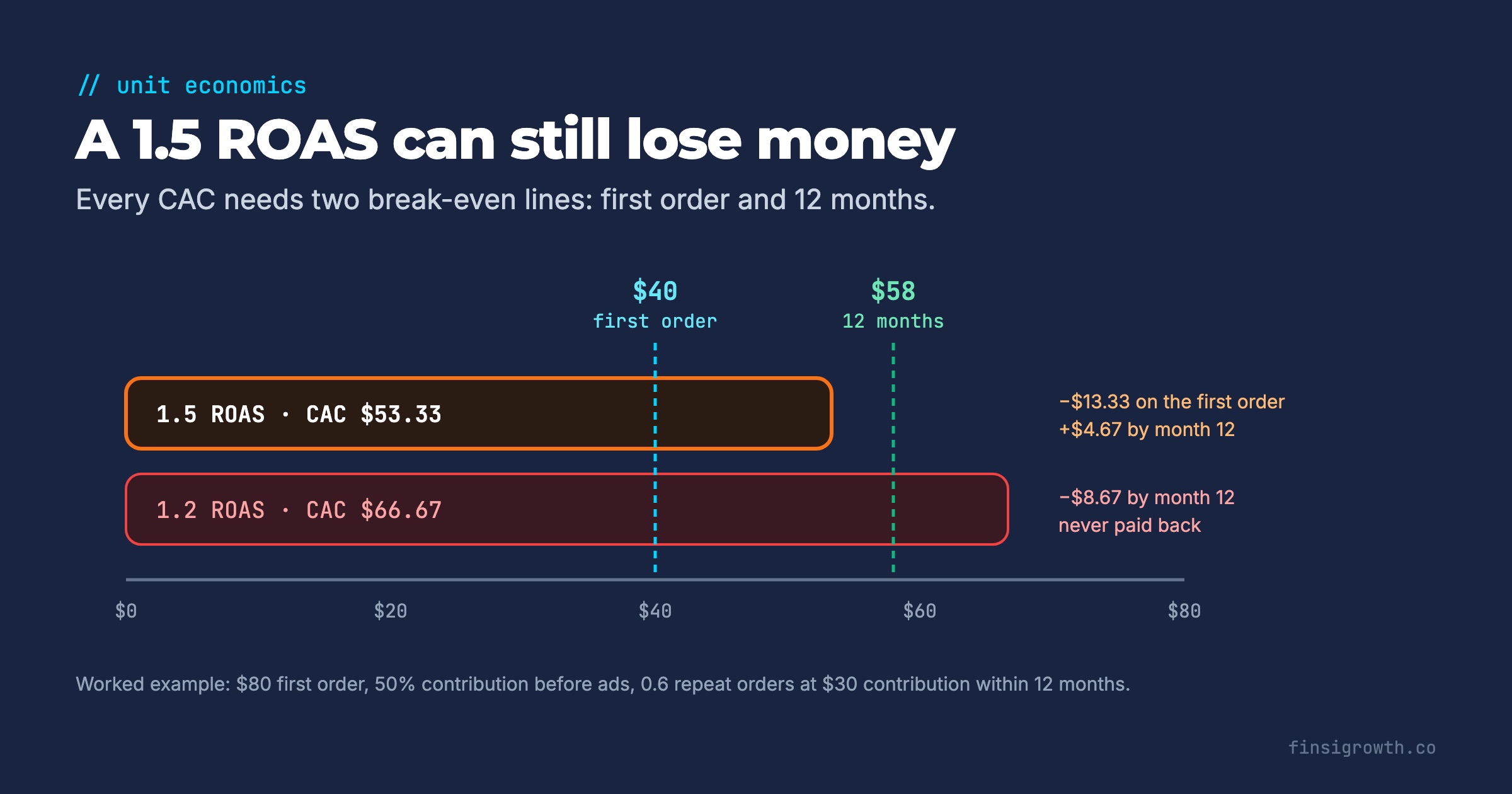
Break-even CAC is two numbers: first-order contribution and 12-month contribution. Below 67% margin, a 1.5 ROAS loses money on the first order.
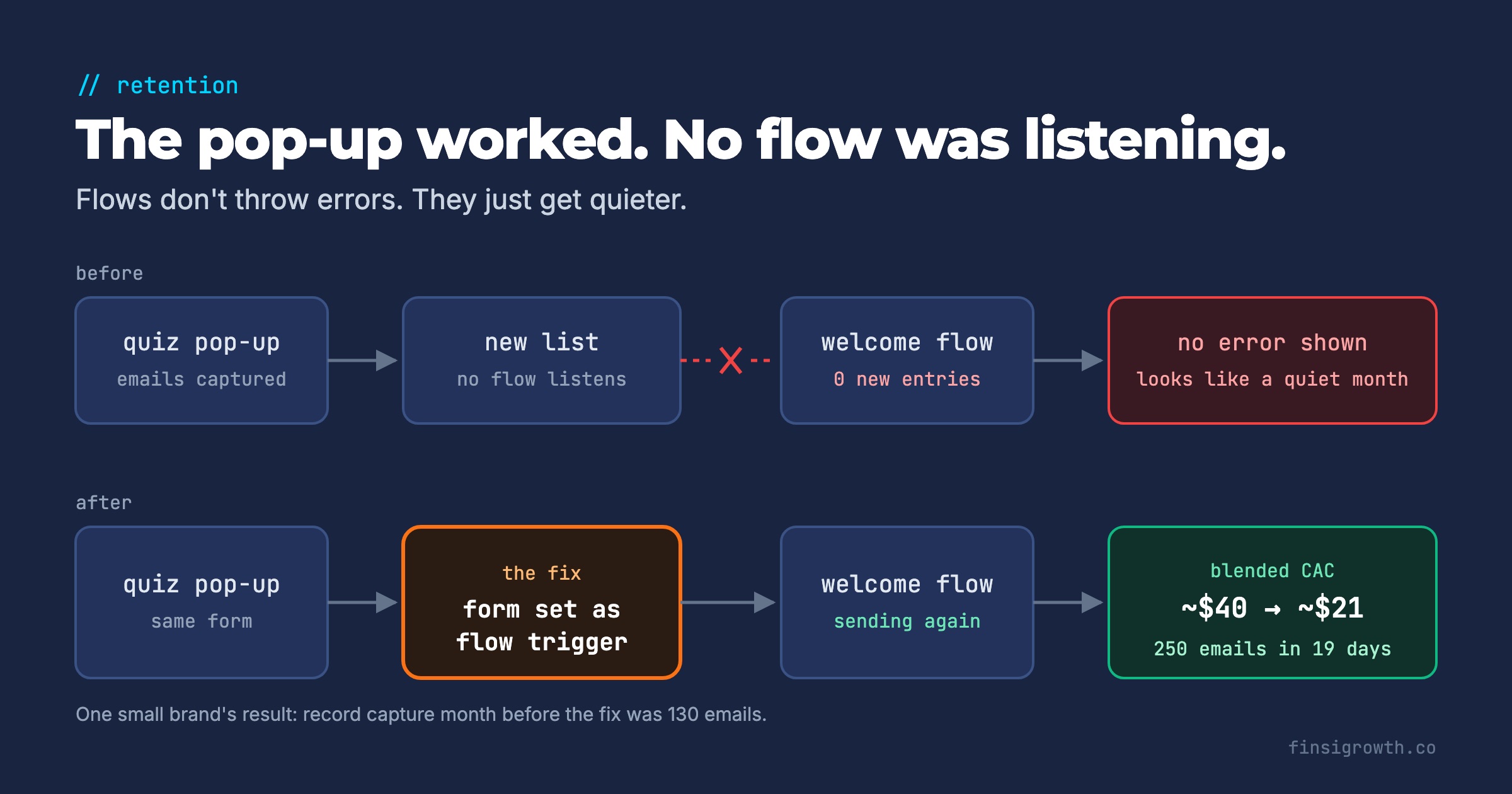
Most broken Klaviyo flows fail silently: pop-ups that feed no flow, dead discount codes, colliding triggers. A 60-minute monthly audit catches all six.
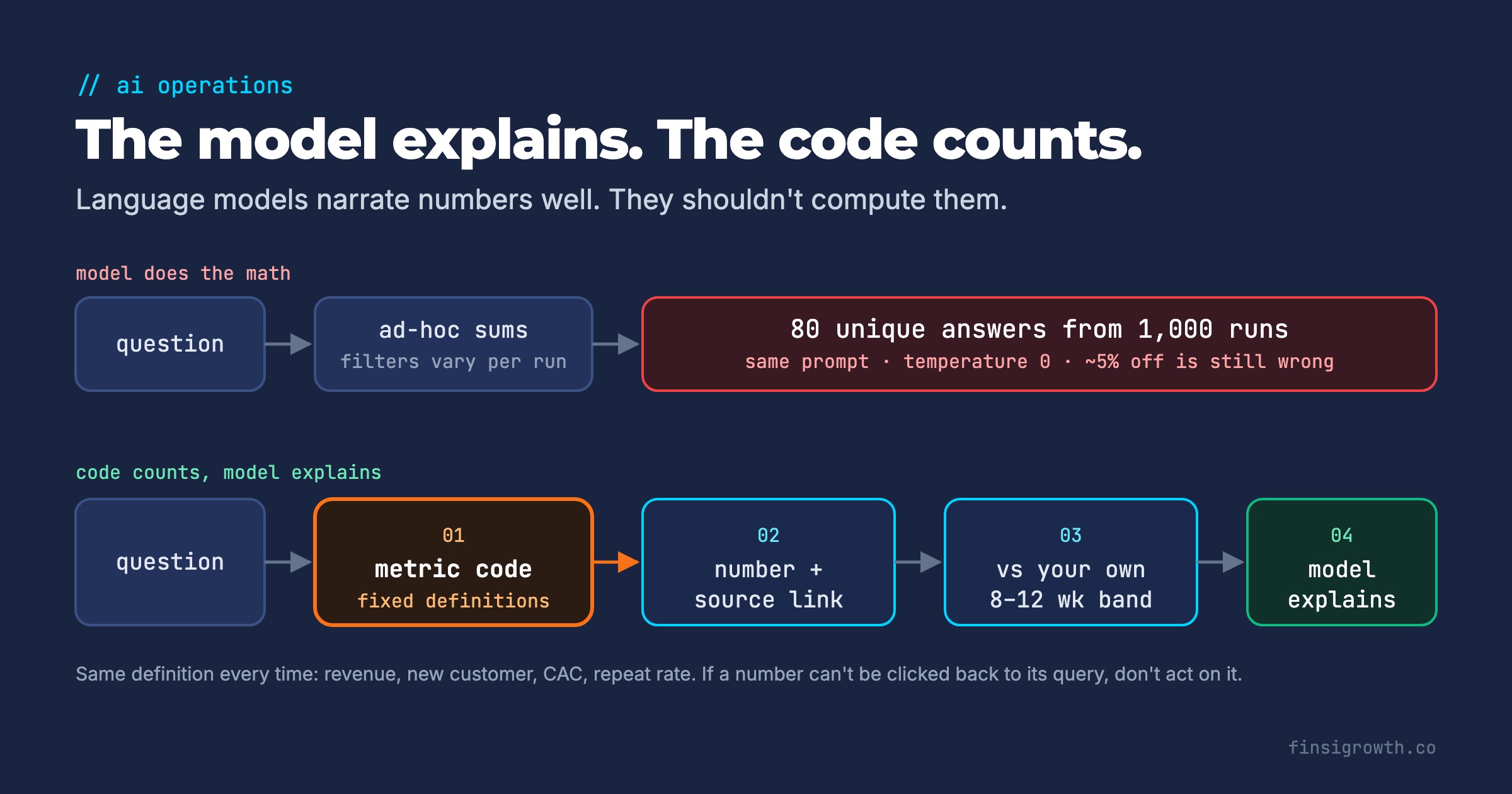
AI analytics loses trust when it gives different numbers each run. Fixed metric definitions, your own baselines and source citations make it trustworthy.
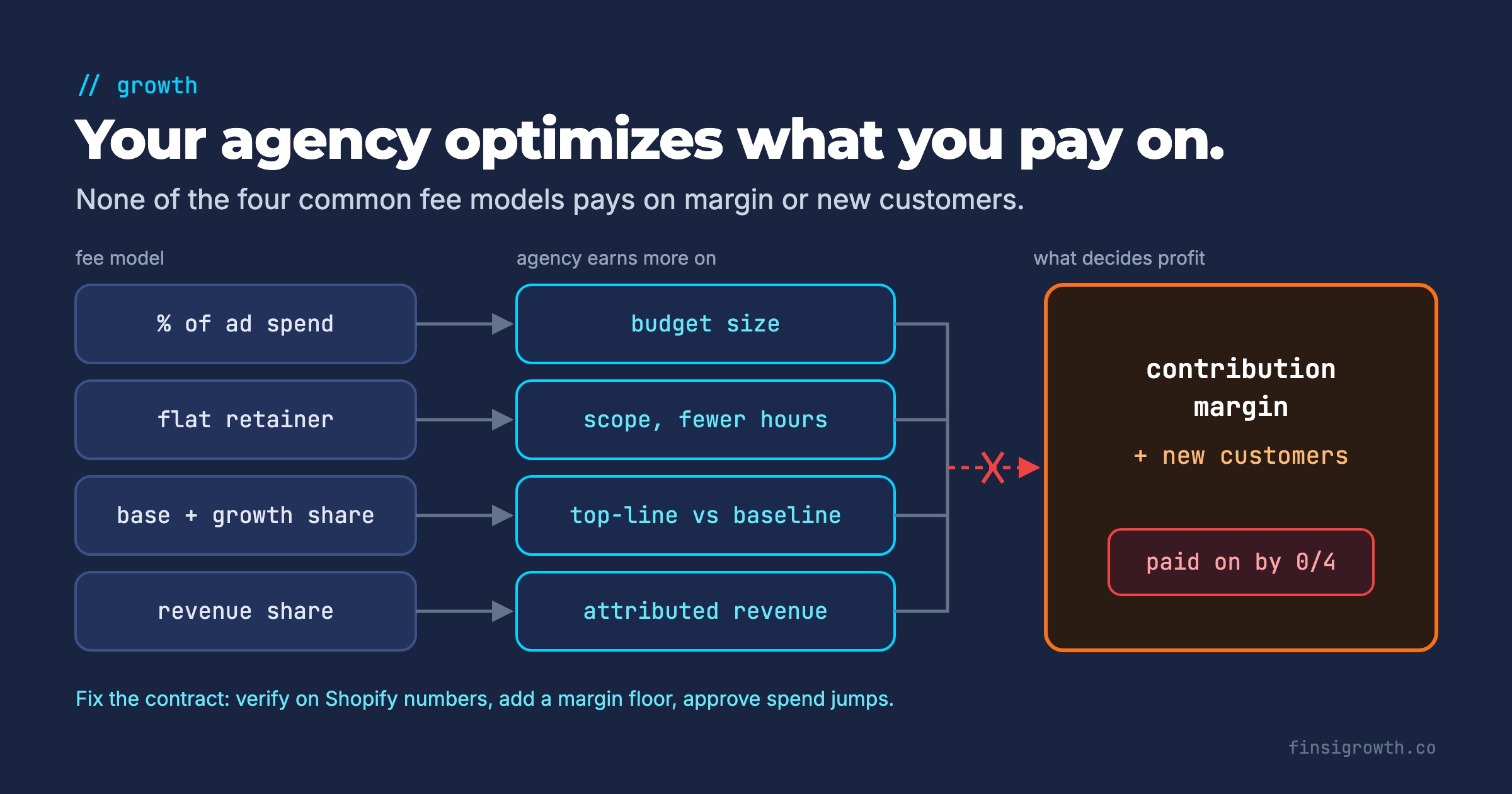
An agency paid on spend will optimize spend. Here's what % of spend, retainers, base + growth and rev share each reward, with real deal terms and fixes.
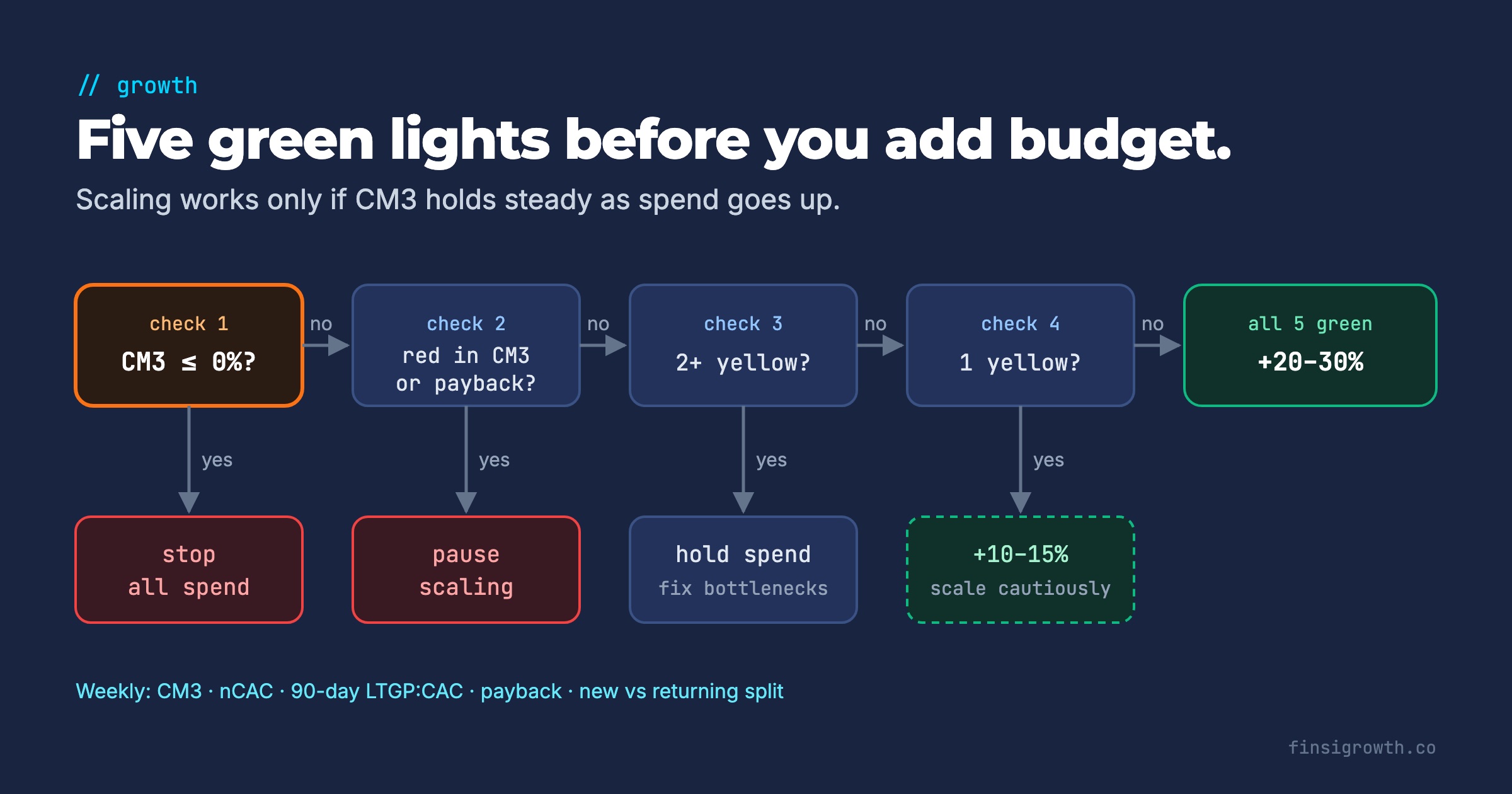
Most brands scale by gut feel. They watch ROAS tick up and throw more money at it. The ones that actually survive scaling use a system — five metrics, checked weekly, that tell you exactly when to push and when to pull back.
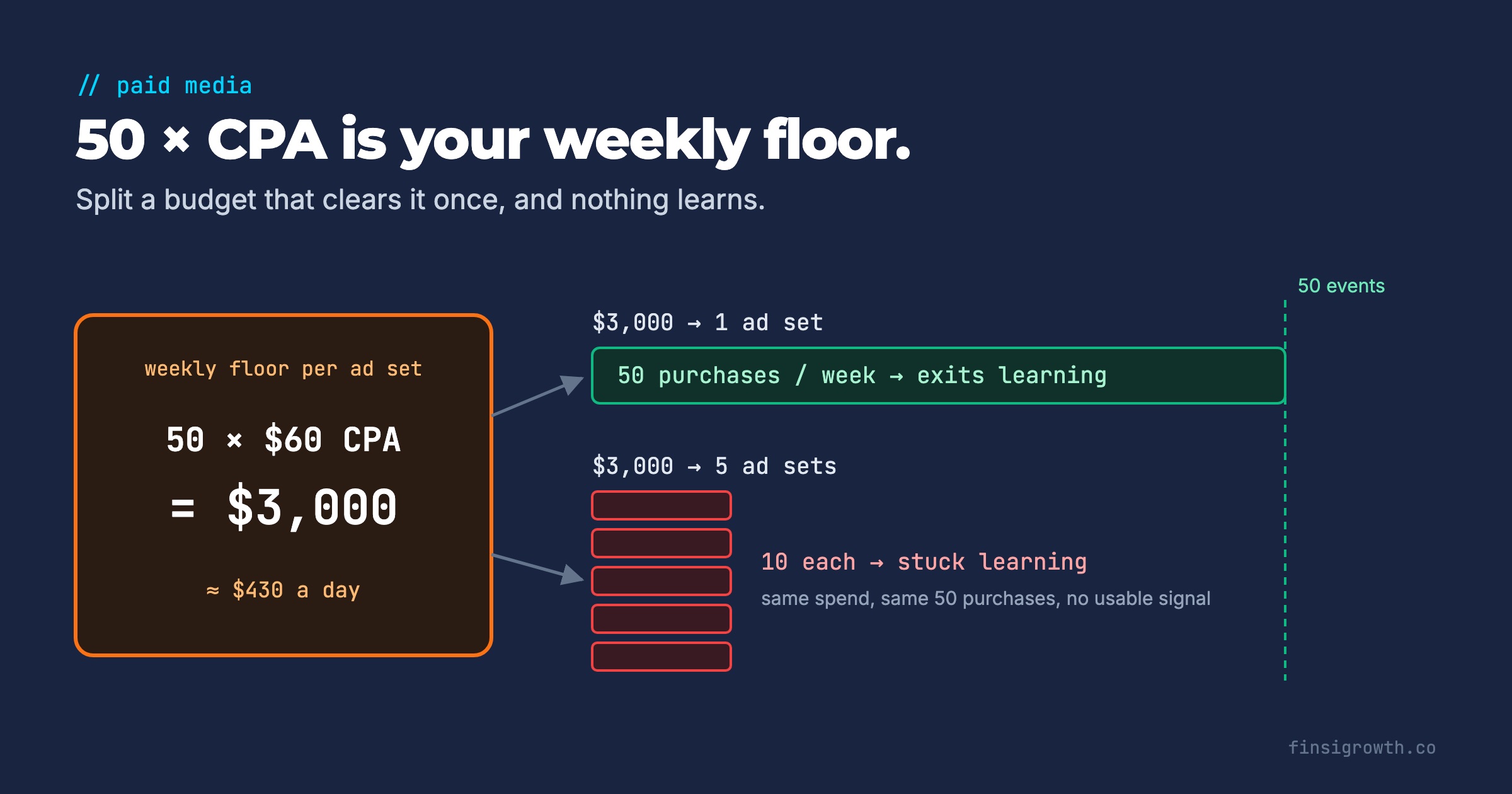
Meta needs about 50 conversions per ad set per week. Multiply 50 by your CPA to get the weekly floor; below it, splitting budget buys noise, not learning.
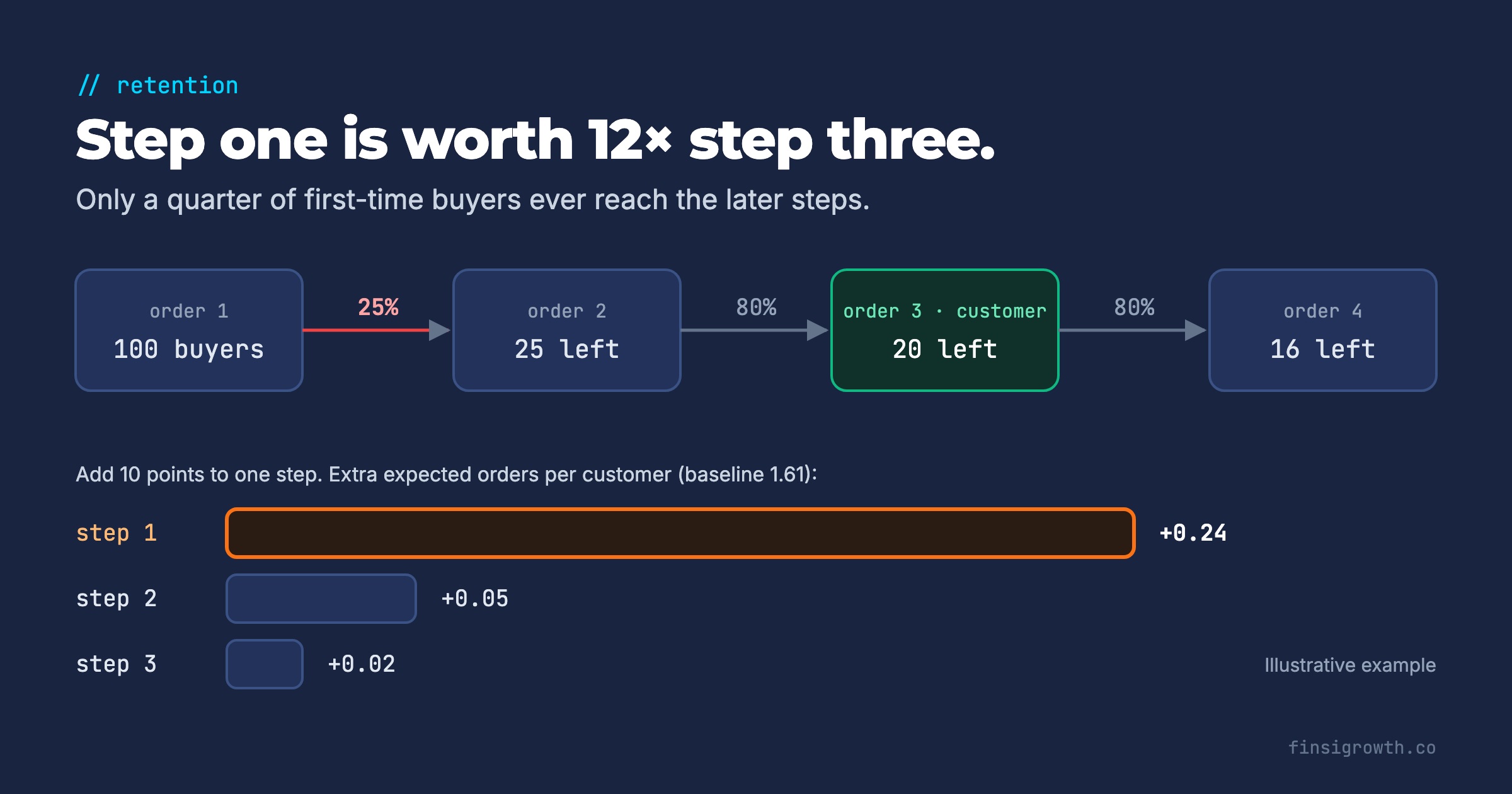
Most customers you lose leave at order two or three. Track next-order probability by order number, not an average churn rate, to see where they go and why.
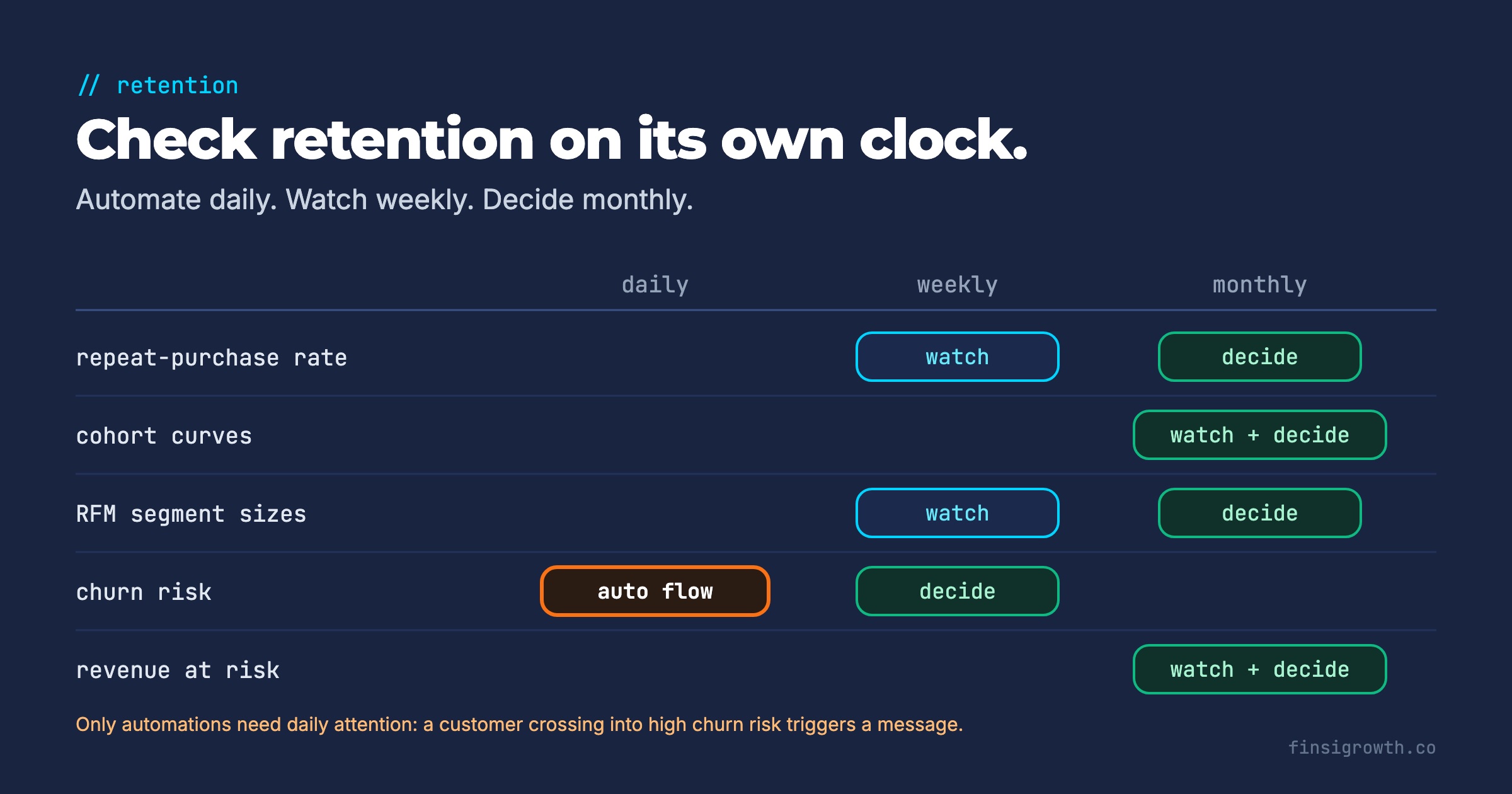
Repeat rate, cohort curves, RFM health, churn risk and revenue at risk: how to calculate each in Shopify and Klaviyo, and how often to actually check it.
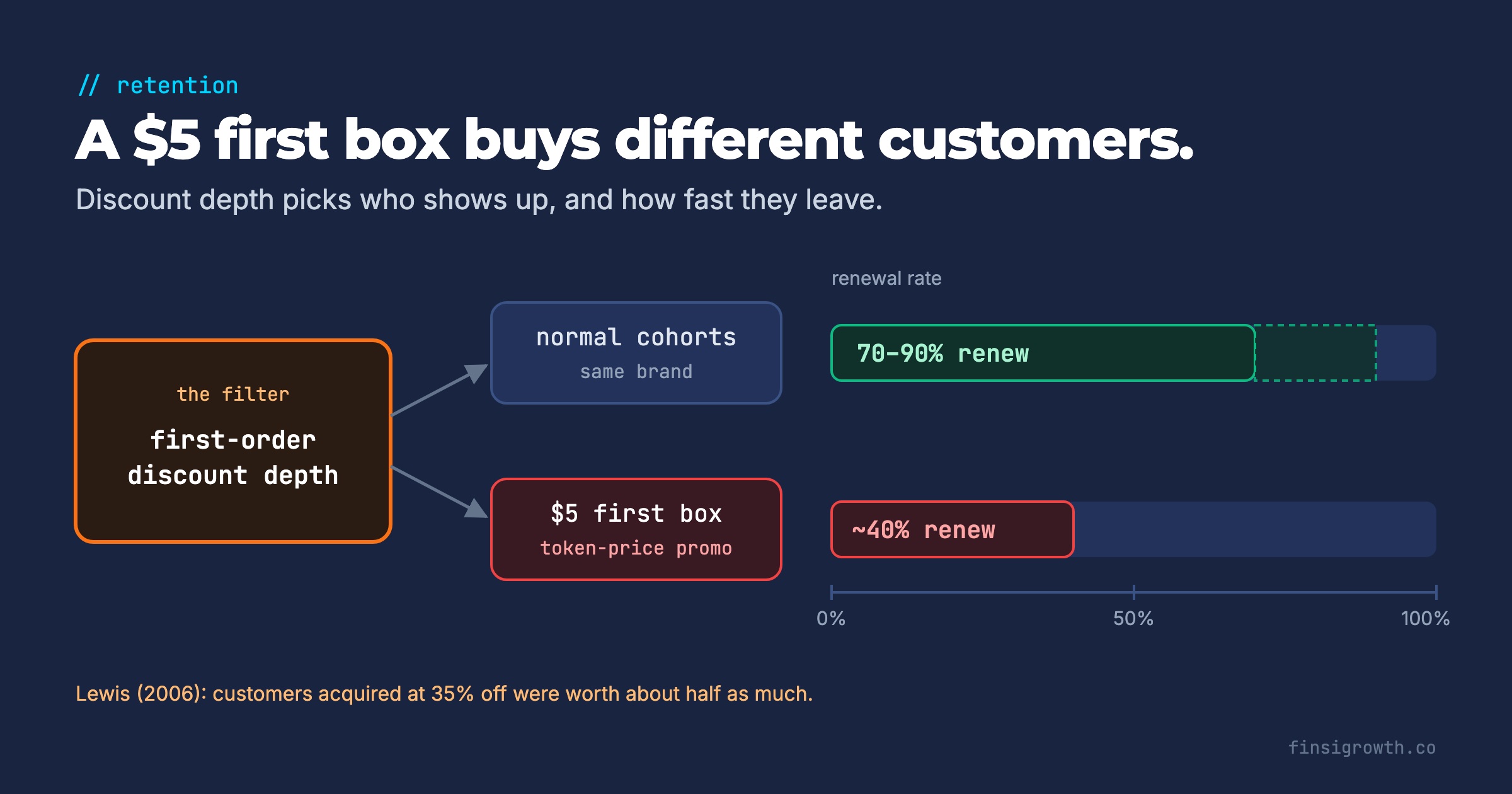
Deep intro discounts buy volume, not subscribers. One $5 first-box cohort renewed at ~40% vs 70–90% normally. Here's how to measure depth by cohort.
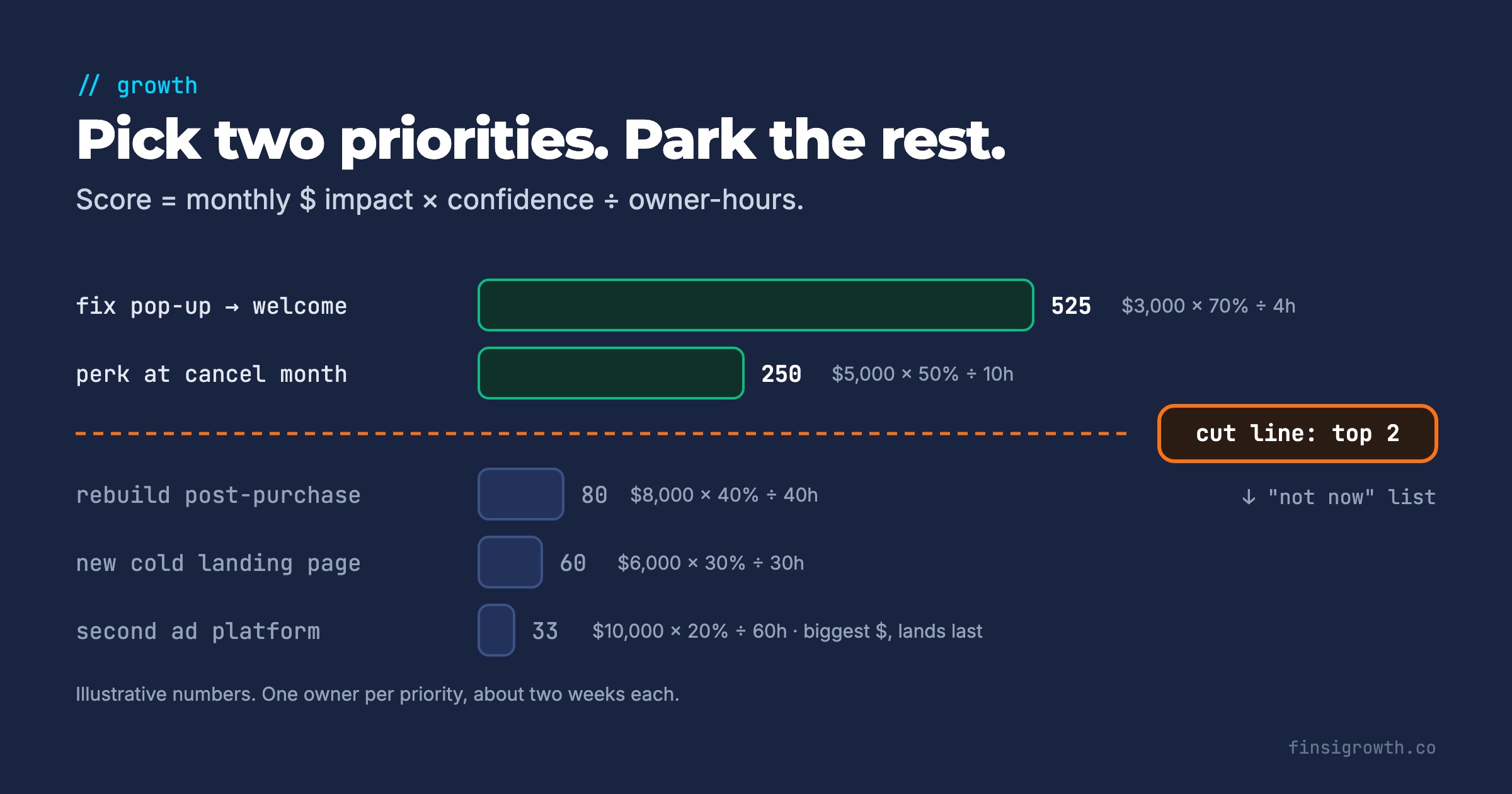
Small DTC teams don't lack data. They lack hours. Pick two priorities by dollar impact per hour of effort, give each one an owner, and park everything else.
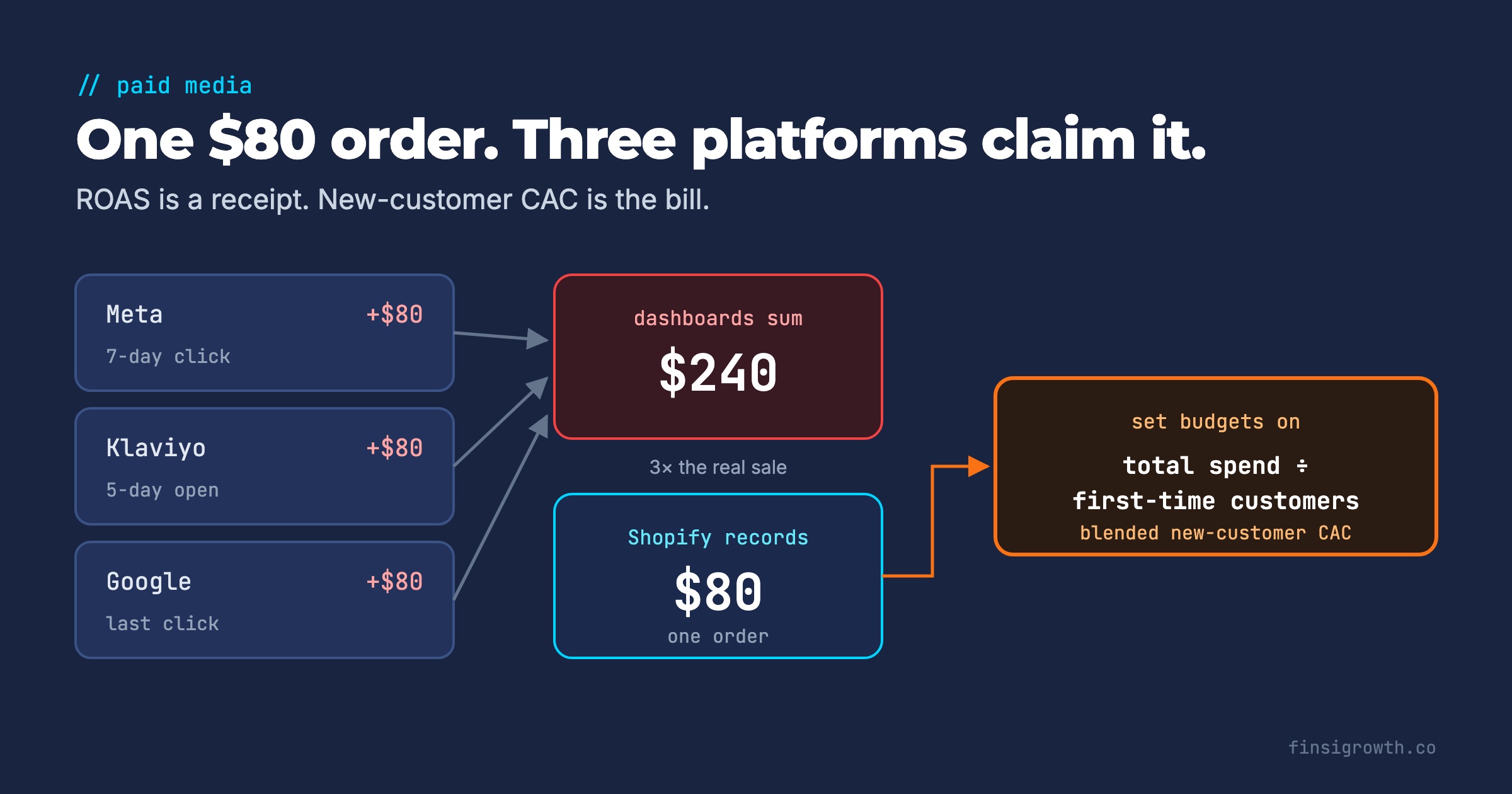
Meta, Google and Klaviyo each count the same order. Reconcile to Shopify: dedupe pixel events, strip renewals and judge spend on blended new-customer CAC.
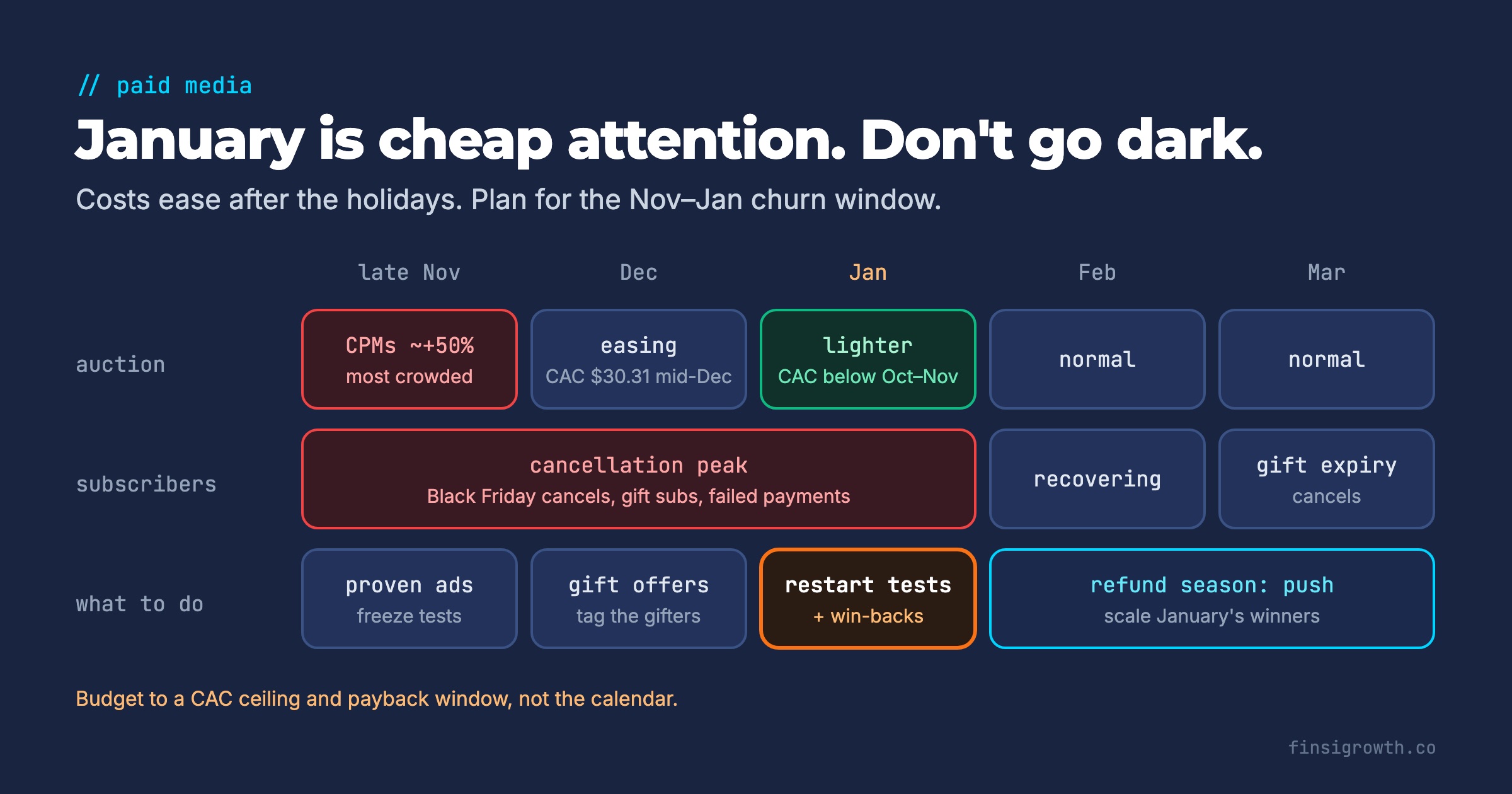
Cutting Q1 ad spend is usually a mistake. Auctions get cheaper after BFCM and refund season follows. Plan for Nov–Jan churn instead of hiding from it.